

Back Policy/Litigation
Back Resolutions
Back Current Initiatives
Back Donate
Default image for pages

Why is voting proxy ballots so important? 

The shareholder proposal process allows both large and small shareholders to alert corporate boards and the investor community to their concerns and to request timely action on emerging, or neglected, issues. A key element of process allows shareholders who meet certain criteria to submit proposals for inclusion in the company’s proxy statement for a vote by all shareholders holding voting shares.

Every year, members of the ICCR community file between 300 – 500 of these shareholder proposals on a range of environmental, social, and governance (ESG) issues. Resolutions that make it onto corporate proxy ballots then go on to a vote of all shareholders at corporate annual general meetings (AGMs), which generally occur each year in the spring. Votes in favor of shareholder resolutions in the double digits are very successful in focusing management and investor attention on ESG issues. The following proxy exempt solicitations and proxy memos are written by members of our coalition and lay out the arguments for why you should consider supporting their proposals. 

AGM Date: Late January. Walgreens Boots Alliance Vote AGAINST Stefano Pessina (living wage)

AGM Date: 02/26/25. Deere & Co: Meritocratic workplace
AGM Date: 03/18/25. Qualcomm Inc: Retirement plan climate risk
AGM Date: 03/20/25. Walt Disney Co: Retirement plan climate risk
AGM Date: 04/02/25. TD Synnex: Vote against proposal
AGM Date: 04/08/25. Scotiabank: Racial equity audit
AGM Date: 04/08/25. A.O. Smith: Report on hiring discrimination
AGM Date: 04/09/25. Lennar Corporation: Reduce GHG emissions
AGM Date: 04/14/25. Goodyear Tire & Rubber Co: Reduce tire microfiber shedding
AGM Date: 04/18/25. L3Harris Technologies: Report on lobbying
AGM Date: 04/23/25. AutoNation: Report on DEI
AGM Date: 04/23/25. Teledyne Technologies: Vote against director
AGM Date: 04/24/25. Johnson & Johnson: Human rights due diligence
AGM Date: 04/24/25. Pfizer: Vote against director
AGM Date: 04/29/25. CitiGroup: Respect for rights of Indigenous Peoples
AGM Date: 04/29/25. FMC Corp: Vote against proposal 6 (special meeting)
AGM Date: 04/29/25. IBM: Report on lobbying
AGM Date: 04/29/25. Wells Fargo: Vote no on say on pay
AGM Date: 04/30/25. PulteGroup: Reduce GHG emissions
AGM Date: 04/30/25. Coca-Cola: Political alignment and Report on non-sugar sweeteners
AGM Date: 04/30/25. Wynn Resorts: Report on smokefree policy
AGM Date: 05/01/25. RTX Corp: Report on lobbying
AGM Date: 05/03/25. Berkshire Hathaway: Disclose clean energy financing ratio and Establish DEI committee
AGM Date: 05/05/25. AFLAC: Vote against director
AGM Date: 05/05/25. Eli LIlly: Vote against director
AGM Date: 05/05/25. Linde plc: Climate lobbying report
AGM Date: 05/06/25. SkyWest: Freedom of association
AGM Date: 05/07/25. Arch Capital: Workforce diversity disclosures
AGM Date: 05/07/25. Gilead Sciences: Human rights policy
AGM Date: 05/07/25. PepsiCo: Flexible plastic packaging and Non-sugar sweetener risks
AGM Date: 05/08/25. Calix: Vote against director
AGM Date: 05/08/25. Boyd Gaming: Report on smokefree policy
AGM Date: 05/08/25. Idex: Inclusive hiring
AGM Date: 05/08/25. Kraft Heinz Company: Reduce plastics use
AGM Date: 05/08/25. Union Pacific: Executive pay clawback
AGM Date: 05/13/25. Centene: Reduce contributions to climate change and Retirement plan and climate risk
AGM Date: 05/13/25. Group 1 Automotive: Vote for simple majority proposals
AGM Date: 05/14/25. Akamai Technologies: Vote against empty suit proposal
AGM Date: 05/14/25. Elevance Health: Report on DEI
AGM Date: 05/14/25. State Street: Separate chair and CEO and Disclose Community Impact of Transition Finance
AGM Date: 05/15/25. Marsh & McLennan Companies: Vote against director
AGM Date: 05/15/25. Yum! Brands, Inc: Antimicrobial resistance and Workplace health and safety
AGM Date: 05/20/25. JP Morgan Chase: Disclose community impact of transition finance
AGM Date: 05/20/25. McDonald’s: Vote against board chair and Vote against director
AGM Date: 05/21/25. Amazon: Retail GHG emissions, Workplace health and safety audit, and Reduce plastics use
AGM Date: 05/21/25. EOG Resources: Vote against audit committee
AGM Date: 05/21/25. Foot Locker: Reduce GHG emissions
AGM Date: 05/21/25. Mondelez: Climate lobbying report and Report on flexible plastic packaging
AGM Date: 05/21/25. Travelers Companies: Report on climate-related pricing and coverage
AGM Date: 05/21/25. Northrop Grumman: Executive pay clawback
AGM Date: 05/21/25. Old Dominion Freight Line: Emission reduction targets
AGM Date: 05/21/25. Southern Company: Vote against board chair and Disclose assumptions behind fossil fuel investments
AGM Date: 05/21/25. Wendy’s: Worker-driven social responsibility report and Single-use plastics
AGM Date: 05/22/25. Home Depot: Plastic packaging report
AGM Date: 05/22/25. Tenet Healthcare: Vote against director
AGM Date: 05/22/25. ServiceNow: Shareholder nominations
AGM Date: 05/22/25. Verizon Communications: Paris-aligned climate lobbying
AGM Date: 05/23/25. Amgen: Vote against director
AGM Date: 05/27/25. Merck: Tax transparency report
AGM Date: 05/28/25. Chevron: Human rights policy
AGM Date: 05/28/25. Mattel: Reduce climate impact
AGM Date: 05/28/25. Meta: GHG emissions reduction and Report on hate targeting marginalized communities
AGM Date: 05/29/25. Dollar General: Adopt human rights policy
AGM Date: 06/05/25. Netflix: Climate transition plan
AGM Date: 06/05/25. Walmart: Racial equity audit and Vote against board chair
AGM Date: 06/06/25. Alphabet: Disclose GHG reduction goals, Human rights in conflict-affected areas, and Human rights impact of AI advertising
AGM Date: 06/06/25. Digital Realty Trust: Water use reduction targets
AGM Date: 06/10/25. Caesars Entertainment: No-smoking policy
AGM Date: 06/18/25. Comcast: Vote against directors
AGM Date: 06/19/25. BJ’s Wholesale: Increase GHG emission reduction
AGM Date: 06/24/25. MasterCard: Racial equity audit
AGM Date: 06/25/25. NVIDIA: Workforce data reporting
AGM Date: 10/28/25. Cintas: Vote against director
AGM Date: 11/06/25. Tesla: Binding Proposal 6 and advisory Proposal 13 and vote for Proposal 6
AGM Date: 12/05/25. Microsoft: Vote Against Sandra Peterson, Chair of the Governance Committee

McDonald’s departure from the National Restaurant Association over its refusal to abandon support for subminimum wages for tipped workers sets the standard for others to follow. 

NEW YORK, NY, Wednesday, September 24, 2025– Shareholders in McDonald’s ($MCD) were encouraged by the company’s announcement last week that it was leaving the National Restaurant Association (NRA) over the trade association’s continued efforts to support subminimum wages for tipped workers.

The investors have long advocated for an end to the subminimum wage and engaged companies to promote the adoption of a living wage as a human right recognized in multiple international treaties and frameworks, such as the Universal Declaration of Human Rights, the Preamble of the International Labour Organization (ILO) Constitution, and the UN Sustainable Development Goals (SDGs). This commitment is also reflected in ICCR’s Living Wage Investor Statement, with the support of $4.5 trillion in assets under management and advisement.

McDonald’s CEO, Chris Kempczinski, cited “an uneven playing field” that allows casual-dining restaurants, bars, and other establishments in many states to pay a subminimum wage of $2.13 per hour to tip-earning workers. McDonald’s employees and many other fast food restaurant employees aren’t eligible for tips. “If you are a restaurant that allows tips or has tips as part of your equation, you’re essentially getting the customer to pay for your labor,” Kempczinski said.

Said Saru Jaramayan of One Fair Wage, which advocates for a phasing out of the subminimum wage and tips to a minimum wage of $15 across the industry, McDonald’s break with the National Restaurant Association exposes what we’ve been saying for years: the subminimum wage for tipped workers is indefensible. It is unfair to workers, a legacy of slavery that was created to allow restaurants to hire women of color for free, forcing them to tolerate economic instability and harassment to feed their families from tips. But it is also unfair to employers — not just businesses like McDonald’s but thousands of small businesses across the country that do not ask customers for tips and are required to pay their workers a full minimum wage with tips on top. The National Restaurant Association, led by corporate restaurant chains like IHOP and Denny’s, has fought to preserve this unjust, two-tiered wage system that disproportionately harms low-wage workers and shields big chains from paying their fair share. It is time to close the loophole and ensure every worker earns a real minimum wage with tips on top directly from their employer.” 

Given an ever-growing national labor shortage exacerbated by current immigration policies, more and more companies are facing calls to increase workers’ wages to improve retention and recruitment. According to an analysis by the Center for American Progress, in the eight states where the subminimum wage was eliminated, workers and businesses in tipped industries have done as well as or better than their counterparts in other states. The U.S. federal minimum wage has remained stagnant at $7.25 an hour since 2009. Given cost-of-living increases, a worker earning the federal minimum wage today has effectively received a 28% pay cut.  Investors believe wage increases for the lowest earners can aid in addressing systemic risks, such as income inequality and gender and racial disparities in the U.S. labor market that can have long-term societal and economic impacts.

“Research suggests that paying a living wage for all businesses is a long-term investment that can yield significant business benefits by addressing broader risks that impact the overall health of our portfolios,” said Caroline Boden of Mercy Investment Services. “We applaud McDonald’s for its leadership and call on its competitors to follow suit and abandon the antiquated and discriminatory subminimum wage, and call for companies to support a living wage for all.”

“McDonald’s bold step to reject subminimum wages sets a powerful example,” said Kevin O’Neal-Smith, Director of Impact at Adasina Social Capital.Real leadership means saying yes to equity and living wages for all. When companies invest in living wages, they build stronger teams, improve employee retention, and lay the foundation for a resilient and thriving business. This is a meaningful step forward for wages and labor rights, but there’s still a long way to go—not just for McDonald’s, but for the entire industry. Our vision is an economy where no one is left behind, and every worker is valued, respected, and earns enough to thrive.”   

Said Nadira Narine, ICCR’s Director of Strategic Initiatives,While we applaud McDonald’s for standing with workers in its decision to leave the NRA over its position on subminimum wages for tipped workers, we expect its lobbying at all levels of government on health and safety and ‘know your rights’ training, for example, to reflect this same protective stance towards workers. As an industry leader, McDonald’s must model best practices on worker rights to the benefit of all stakeholders.”
 

About the Interfaith Center on Corporate Responsibility (ICCR)
The Interfaith Center on Corporate Responsibility (ICCR) is a broad coalition of more than 300 institutional investors collectively representing over $4 trillion in invested capital. ICCR members, a cross-section of faith-based investors, asset managers, pension funds, foundations, and other long-term institutional investors, have over 50 years of experience engaging with companies on environmental, social, and governance (“ESG”) issues that are critical to long-term value creation.  ICCR members engage hundreds of corporations annually in an effort to foster greater corporate accountability. Visit our website www.iccr.org and follow us on LinkedIn, Bsky and X.

CONTACTS:
Susana McDermott
Director of Communications
Interfaith Center on Corporate Responsibility (ICCR)
201-417-9060 (mobile)
smcdermott@iccr.org

Joint Declaration Calls for New UN Standards on Decent Work

In five shareholder proposals, investors illustrate how the company’s business model, policies, and practices create risks for multiple stakeholders that threaten shareholder value.

NEW YORK, NY, TUESDAY, MAY 27, 2025 – At Amazon’s ($AMZN) annual meeting last Thursday, five shareholder proposals were presented for a vote, each raising issues that illustrate how the company’s business model, dominance across multiple industries, and its lack of adequate risk management structures expose the company, its stakeholders and society to significant and material risks.

Amazon is one of the largest companies in the world by market cap and the second-largest employer in the U.S. For several years, shareholders, including ICCR members, have been pressing the company through shareholder proposals to implement policies that will mitigate adverse social and/or environmental impacts. While all the proposals failed, investors say they will continue to raise the issues as they present material risks.

This proxy season, ten resolutions were filed, but Amazon sought no action relief from the SEC on nearly all proposals, and only five made it onto the proxy for a vote by shareholders. While the company faces several controversies related to freedom of association, that proposal was excluded from the proxy as a result of the no-action process. Worker rights have been a consistent theme at Amazon given the company’s business model, which subjects warehouse and delivery workers to ever-increasing production and speed pressures, and board/management’s strong opposition to employees’ unionization efforts.

“Tulipshare’s proposal, shaped by four years of engagement and backed by investors representing billions in assets, was built on a simple premise: workers power businesses,” said Antoine Argouges, CEO and founder of Tulipshare. “Although Amazon brands itself as ‘Earth’s Safest Place to Work,’ periodic reports have revealed a mounting safety and injury crisis in its warehouses, with employees facing unsafe working conditions and unfair treatment globally. This is a critical point in the company’s trajectory for Amazon to act on its stated values and take meaningful action towards protecting its workers. We investors must monitor Amazon’s leadership and guide the company to ensure that basic human rights are upheld in one of the world’s largest supply chains.”

On May 15th, ICCR hosted an investor briefing, The Hidden Liabilities of Amazon’s Workforce Model, which featured several Amazon employees who had suffered workplace injuries. The video recap from this event can be viewed here. Also on May 15th, the Strategic Organizing Center released a report, Failure to Deliver, which presented data from 2024, indicating that the rate of serious injuries in Amazon’s warehouses was nearly double that of non-Amazon warehouses, highlighting that Amazon’s operations have continued to be dramatically more dangerous for workers than the broader warehouse industry.

“Amazon shareholders and company leadership continue to ignore the company’s astronomical injury rate and brutal treatment of workers — even after the scathing findings of the Senate HELP Committee and the corporate-wide OSHA settlement, said Bianca Agustin, Co-Executive Director of United for Respect Education Fund. “Amazon sacrifices safety for speed, leaving workers injured, underpaid, and struggling to survive. UFR is doubling down in our efforts to ensure Amazon associates get the dignity and respect they deserve.”

Investors also sought to understand how Amazon was overseeing social and environmental risks related to its increasing use of AI. A proposal filed by the AFL-CIO requested that the company assess potential human rights and worker rights impacts stemming from its use of tech and AI in the workplace.

“The AFL-CIO Equity Index Funds’ proposal requests an independent, third-party assessment of human rights risks associated with Amazon’s use of Artificial Intelligence,” said Isaiah Thomas, RWDSU union organizer and former Amazon warehouse employee. “The right to a safe and healthy workplace is an internationally recognized human right, and Amazon’s use of computer algorithms to set warehouse production quotas and its use of AI-powered robots creates potential safety risks that must be addressed.”

Two proposals highlighted how Amazon’s size and business model will significantly increase the GHG emissions responsible for driving the climate crisis, including a new proposal centered on Amazon’s accelerated build-out of data centers globally, which received 23% support.

Said Eliza Pan, spokesperson for Amazon Employees for Climate Justice, “The AI race is here and it’s changing both literal and political landscapes across the world. How shortsighted Amazon’s Board and investors must be to dismiss getting detailed and transparent information about how Amazon will ensure its ambitious AI buildout plans don’t conflict with climate and environmental impacts. With massive AI data center plans in fossil-fuel dependent places like Saudi Arabia and Virginia, or drought-vulnerable places like Mexico, without corresponding renewable or community investment, Amazon is setting itself up to fail meeting its own Climate Pledge, let alone the science-based climate targets that are needed from large companies.”

“Amazon’s current disclosures only account for the material emissions from approximately 3% of its retail sales,” said Parker Caswell, Climate and Energy Sr. Associate at As You Sow. “This significantly understates the Company’s true emissions, misleading investors and greatly diminishing the value of its disclosures.”

An additional proposal highlights how Amazon’s massive ecommerce and retail businesses make it a significant contributor to the global plastic pollution crisis.

“Our proposal asks Amazon to assess the risks of using non-recyclable flexible plastic packaging,” said Conrad MacKerron, Sr. VP at As You Sow. “Use of flexible plastic packaging, including pouches and sachets for food and beverage applications, has grown rapidly. Flexibles are usually made from several different kinds of plastic and so cannot be recycled in conventional recycling systems. Competitors like Target and Walmart have disclosed their use of flexible plastic and their intent to make all packaging recyclable by a specific date. Amazon has not.”

Although Amazon has been one of the top recipients of shareholder proposals for several years, in the majority of instances and to the frustration of investors, the company has remained reticent to engage with shareholders about their concerns and consistently opposes all ESG-related proposals submitted for its proxy. This remained true this proxy season.

Said, Ryan Gerety, Director of the Athena coalition, “Amazon founder Jeff Bezos and CEO Andy Jassy, along with the rest of Amazon’s Board of Directors, still refuse to address serious concerns about the corporation, including its illegal interference with the rights of workers to unionize, refusal to address the injury crisis in its warehouses, failure to live up to its climate commitments amidst its data center boom, and provision of cloud computing to customers with demonstrated human rights violations and war crimes. Amazon executives and the Board, flanked by large Wall Street investors like Vanguard, can close their eyes to the company’s negative impacts—but the public and workers across all parts of the company certainly will not.”

CONTACT:
Susana McDermott
Director of Communications
Interfaith Center on Corporate Responsibility (ICCR)
201-417-9060 (mobile)
smcdermott@iccr.org 

About the Interfaith Center on Corporate Responsibility (ICCR) 
The Interfaith Center on Corporate Responsibility (ICCR) is a broad coalition of more than 300 institutional investors collectively representing over $4 trillion in invested capital. ICCR members, a cross-section of faith-based investors, asset managers, pension funds, foundations, and other long-term institutional investors, have over 50 years of experience engaging with companies on environmental, social, and governance (“ESG”) issues that are critical to long-term value creation.  ICCR members engage hundreds of corporations annually in an effort to foster greater corporate accountability. Visit our website www.iccr.org and follow us on LinkedInBsky and X.

“Amazon will tell you that outside groups are misrepresenting their injury record, but in fact, Amazon is misrepresenting their injury record,” he said at an investor briefing organized by the Interfaith Center on Corporate Responsibility, a New York-based coalition of faith- and values-based investors, on Thursday. “I am not part of any outside group. I’ve been at Amazon for almost six years as a warehouse employee. I received employee of the month. As a Nodal Onboarding Academy trainer, I have received numerous accolades for my teaching abilities. I also received from Amazon a permanent physical disability.”

By Matthew Illian, Director of Responsible Investing, United Church Funds

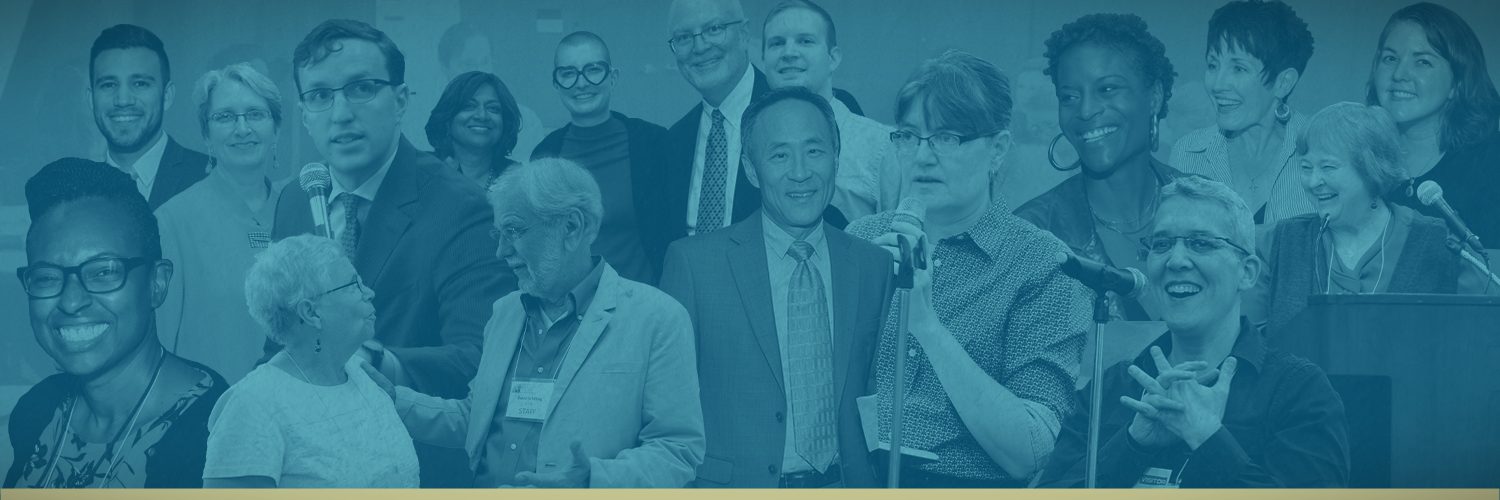
As we gathered at the Interfaith Center “God Box” for February’s ICCR conference, many of us carried a troubled spirit. You didn’t hear any lamenting, but you could sense our weariness in the way we greeted one another. Whether with words, a smile, or a hug, our interactions were more heartfelt than usual. We weren’t just saying hello; we also came seeking something – perhaps reassurance.

We were two months into rapid-fire Executive Orders from the Trump Administration, and many were witnessing their efforts to uphold a more just and equitable society being dismantled nearly overnight. In planning this conference, we determined that it was essential to turn to the elders of the ICCR community. We were eager to know how they kept the fire going through distressing times. How had they persevered through the ups and downs of political regime changes?

The session was dubbed a “Fireside Chat with ICCR Elders”. As it began, Sister Barbara Aires, Steven Heim, Father Séamus Finn and Bill Somplatsky-Jarman (SJ), who had collectively served the ICCR community for over 140 years, started sharing their stories.

One of the recurring themes was about the power of persistence. Both Steven and Sister Barbara shared stories of their unwavering determination, such as calling corporate offices on a daily or weekly basis. When Sister Barbara was told that Lee Scott, CEO of Walmart from 2000-2009, wouldn’t to speak with her, she replied, “Tell him that I want to speak with him,” which got a hearty chuckle from the audience, because we knew this was said in a way that would be very difficult for the CEO to refuse. And indeed, Sister Barbara received a call from Mr. Scott the very next day.

Another common theme focused on the power of trust, relationships and alliances. The audience heard stories of allies from the labor movement and personally affiliated corporate directors coming together to partner with the ICCR community. These decades-long relationships enabled beneficial solutions at large multi-national banks, managing the debts of the South African government and other emerging governments that would not have been possible without these relationships of trust.

They also spoke about the importance of how we can orient ourselves to make the most of long-term relationships. After Bill SJ reflected on a prior period of struggle when the Neocon movement was reinvigorated during the Reagan Administration, he shared, “The adversarial approach is often not the way to go. You have to develop and nurture relationships of trust, and all kinds of amazing things can happen.” Along these lines, Steven encouraged all listening to consider the “adopt-a-company” approach, where you engage with a company on a wide range of topics for the long term.

All four speakers emphasized the power of in-person participation. For Father Séamus, inspiration came from site visits with ICCR members and employees of Disney and McDonald’s to factories in Hong Kong and China as part of Project Kaleidoscope (a multi-stakeholder group that sought to improve working conditions in factories). Sister Barbara collected inspiring and humorous encounters at a shareholder meeting at Southern Company. For Steven, inspiration came from a 2005 trip to the Ecuadorian Amazon, which made him more committed to advocate for the rights of Indigenous Peoples. (For more insight into each of these stories, you can listen to the recording.)

The ICCR elders also spoke of ways to stay inspired and emboldened despite challenges. They spoke of the importance of finding sacred spaces and quiet places to allow your spirit to be filled. They spoke of keeping inspirational texts close by as reminders of one’s values, and of finding support from the ICCR community and other communities with shared values.

The last message was about faith: “Keep up your hearts,” shared Sister Barbara. “Know the values that you have. The faith that strengthens you to proceed. Don’t be in despair over what you see. I am proud of all the young people who are popping up like crazy… smarter than I am. Use those skills for the good of all.”

After it was over, we understood the assignment before us in a new way. We held a knowing to do the work that comes from a deeper place. The fire was still burning, and would stay alight even in these troubled times.

ICCR has been publishing the Proxy Resolutions and Voting Guide annually since 1974 as a way to educate and build support for member proposals. In our Guide, you will find all ICCR member-sponsored proposals for 2025 corporate proxies along with a preliminary overview of the proxy season and short features from proponents about their engagements on key environmental and social issues. Please feel free to share this resource widely with your networks. And, if you are an investor, we urge you to exercise your shareholder rights by voting your proxies.

Download our 2025 Guide here.

Download the launch webinar slide deck here.

NEW YORK, NY, THURSDAY, MARCH 20, 2025 – A group of nearly 100 institutional investors issued a statement today in support of comprehensive immigration reform they view as critical to creating business certainty, operational continuity, economic expansion, and a more cohesive and just society. The statement includes a series of recommended actions for Congress, Companies, and Investors to help achieve this goal.

The statement was issued in response to recent executive orders that are already resulting in an increase in raids by U.S. Immigration and Customs Enforcement (ICE) and the deportations and detentions of people and families without documentation. These political actions are creating heightened anxiety and unpredictability that investors say are already impacting the markets.

Said New York City Comptroller Brad Lander, “Immigrants are an integral part of the rich and diverse tapestry that is America, and have contributed significantly to the workforce, and cultural and entrepreneurial spirit that defines this nation. Congress should act now, without delay, to pass the comprehensive and just immigration reform legislation needed to maintain a competitive edge in the global economy and ensure growth and sustainability across industries and sectors.”

Citing a recent report from the American Immigration Council1, the statement underscores how mass deportations by the new administration, if executed, could result in a nearly 5% reduction in the labor force that would cripple future labor force growth, disrupt business operations, and significantly increase labor costs for all employers, now and for years to come.

“Immigrants help power our economy, and they are threaded throughout the workforces of nearly every sector and company either directly or via their supply chains,” said Lauren Compere of Boston Common Asset Management. “In 2023, immigrants were about 18.6% of US employment, concentrated in agriculture, construction, and healthcare but also higher-skilled sectors. If mass deportations occur, we can expect labor shortages to grow, along with the prices of the goods and services they help to provide. These are considered strong risks for investors. In contrast, comprehensive immigration reform will help, not harm, U.S. businesses and the economy.”

The investor statement further notes that “… removing this critical workforce through mass deportations would result in a GDP loss between 1.2 and 7.4 percent below baseline by the end of 2028, slowing down the U.S. economy and restricting the growth potentials of many American businesses. Moreover, a one-time mass deportation is conservatively estimated to cost the U.S. government $315 billion to execute.”2

Said Rocio Saenz, Secretary-Treasurer of the Service Employees International Union (SEIU), “Immigrant workers contribute significantly to all sectors of the U.S. economy. They are the essential field workers who harvest our food, the janitors who maintain our buildings, the doctors and nurses who provide care when we’re sick, and the home care workers who assist our aging loved ones and those with disabilities. Removing these workers from our communities and workplaces would devastate entire families and have a negative impact on our local and state economies. We urge policymakers at all levels of government to stand in solidarity with immigrants, oppose the mass separation of American families, and work towards establishing legal pathways to citizenship to keep families together.”

Said Katie McCloskey of Mercy Investment Services, “Potential mass deportations pose significant and material human rights risks that concern investors, particularly faith-based investors. The Sisters of Mercy work for just and humane immigration laws, and as the financial ministry of the Sisters of Mercy, Mercy Investment Services recognizes that these actions not only reverence the dignity of each person but strengthen our economy and the companies in which we invest.”

The statement and signatories are available at this link.

CONTACT:
Susana McDermott
Director of Communications
Interfaith Center on Corporate Responsibility (ICCR)
201-417-9060 (mobile)
smcdermott@iccr.org 

About the Interfaith Center on Corporate Responsibility (ICCR) 
The Interfaith Center on Corporate Responsibility (ICCR) is a broad coalition of more than 300 institutional investors collectively representing over $4 trillion in invested capital. ICCR members, a cross-section of faith-based investors, asset managers, pension funds, foundations, and other long-term institutional investors, have over 50 years of experience engaging with companies on environmental, social, and governance (“ESG”) issues that are critical to long-term value creation.  ICCR members engage hundreds of corporations annually in an effort to foster greater corporate accountability. Visit our website www.iccr.org and follow us on LinkedInBsky and X.

  1. https://www.americanimmigrationcouncil.org/research/mass-deportation ↩︎
  2. https://www.piie.com/blogs/realtime-economics/2024/mass-deportations-would-harm-us-economy ↩︎

While legislative attacks may create temporary barriers, they cannot halt the momentum of a cultural movement. DEI is not just a set of policies or workshops—it’s a mindset and a commitment to ensuring fairness, opportunity, and inclusion for everyone.

Under President Donald Trump’s Project 2025, the administration has launched an unprecedented effort to dismantle diversity, equity, and inclusion (DEI) programs. Federal agencies are now prohibited from observing Black History Month, and employees involved in DEI initiatives have been terminated.