


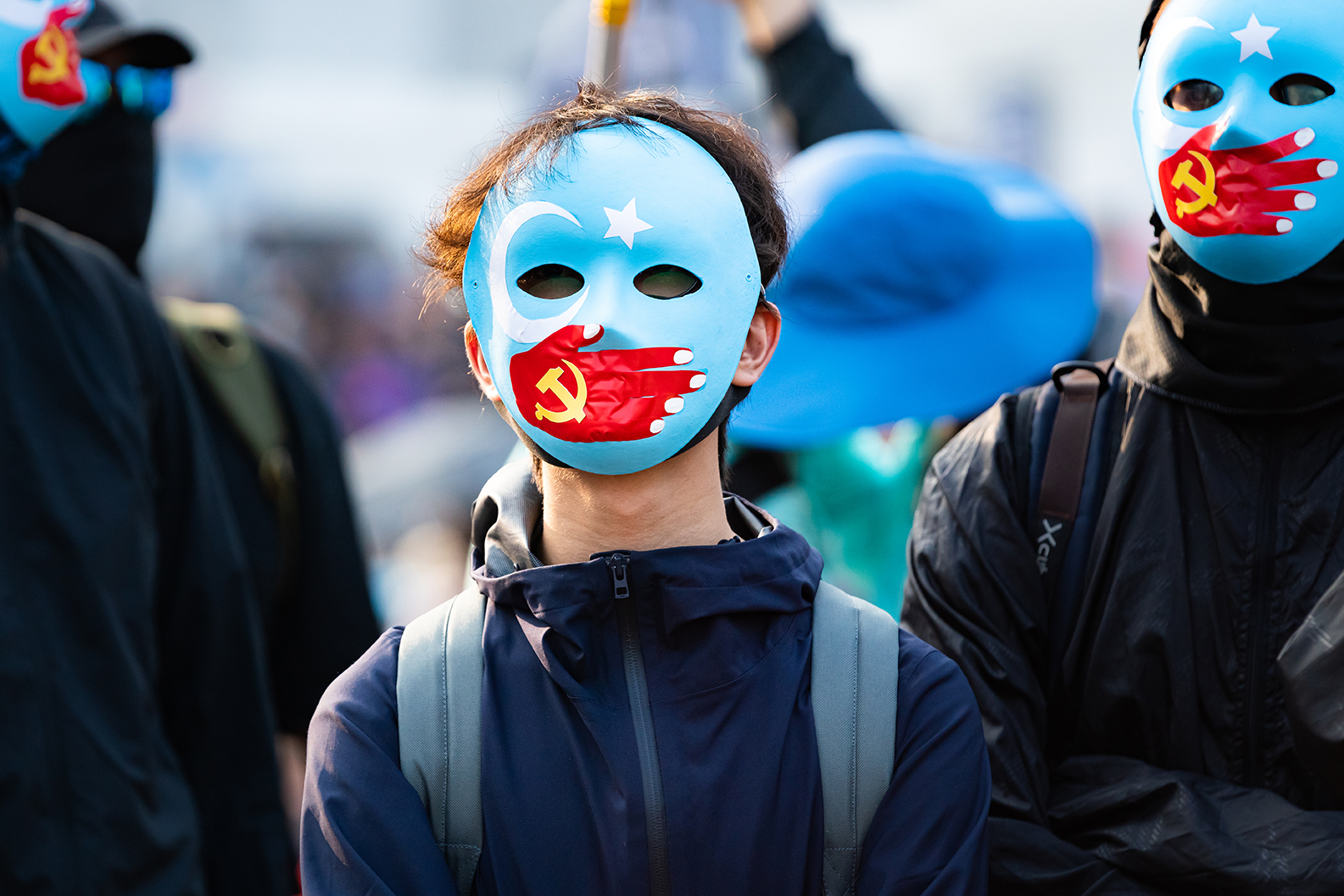
The government of the People’s Republic of China has been subjecting Uyghurs and other Turkic and Muslim-majority peoples living in the Xinjiang Autonomous Uyghur Region (Uyghur Region) to an unprecedented system of state-imposed forced labor programs not only in this Region but across other parts of China. Uyghur forced labor is connected to global value chains including apparel, automotive, electronics, mining and solar industries. Investors are potentially linked to egregious human rights abuses through their investments in companies with operations, investments, partnerships, and other business relationships in or connected to the Uyghur Region.
The Investor Alliance for Human Rights, an initiative of the Interfaith Center on Corporate Responsibility (ICCR), led and coordinated investor engagement on the human rights crisis in the Xinjiang Uyghur Autonomous Region since 2020. Working with the Coalition to End Forced Labor in the Uyghur Region, the Investor Alliance had significant achievements over the past five years, including: bringing together over 75 investors across 14 countries representing over $6 trillion in AUM; initiating engagements with over 74 companies across nine sectors; facilitating investor engagement with diverse stakeholders – the impacted Uyghur community, human rights experts, academics, and government officials; and promoting the filing of over 20 shareholder proposals since 2021 addressing risks of corporate value chains connected to the systematic and widespread human rights violations in the Uyghur Region.
The Equitable Global Supply Chains program will carry on the work with investors to call attention in portfolio companies to Uyghur forced labor, as well as the need to undertake specialized HREDD measures in high-risk areas (e.g., in situations of state-sponsored forced labor). Investors are engaging portfolio companies in the technology and automotive sectors to understand their approach to HREDD in high-risk areas, including sourcing from the Xinjiang region in China.
Our Theory of Change
By working together, investors, companies, civil society organizations, and other stakeholders can maximize their collective leverage to influence governments, international institutions, suppliers and sub-suppliers, and global multi-stakeholder initiatives to take action and prevent systemic nature of the human rights violations in the Uyghur Region.
The Business Case for Action
Companies with business activities or relationships in or connected with the Uyghur Region are at significant risk of causing, contributing, or being directly linked to actual or potential negative human rights impacts. By undertaking human rights due diligence on their own operations, value chains, and business relationships to assess and address risks to rights-holders, companies can ensure that they do not benefit from or exacerbate negative human rights impact.
Current Initiatives
Through a combination of dialogue and the filing shareholder resolutions, ICCR’s members are pressing companies to address the risks of corporate value chains connected to the systematic and widespread human rights violations in the Uyghur Region.

Our Impact
How ICCR is achieving meaningful gains in pressing companies to ensure their business relationships are not connected to human rights abuses in the Uyghur Region.

The number of companies engaged across 9 sectors.

The number of investors collaborating to end forced labor in the Uyghur Region.

The number of shareholder proposals filed asking for action on human rights violations in the Uyghur Region.