



Swimming Together: Can Vessel Owners and Buyers Cooperate to Improve Conditions for Workers in Tuna Supply Chains?
By Chavi Keeney Nana, Director, Equitable Global Supply Chains, ICCR
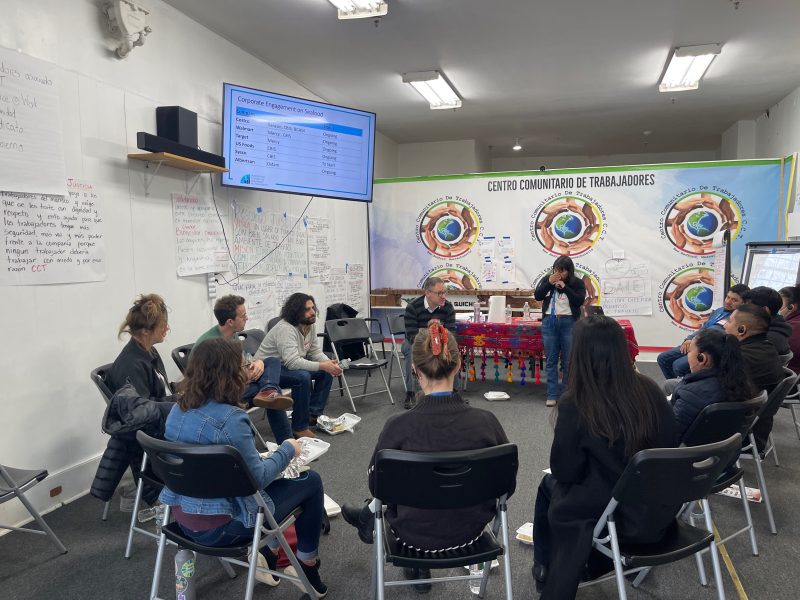
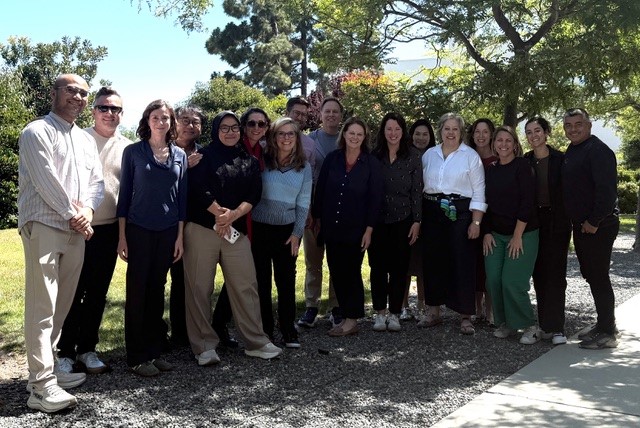
I recently returned from the third working group meeting for the Ethical Tuna Collaboration (ETC), which is designing a multistakeholder, market-based initiative to help address forced labor on tuna vessels. The ETC is convened by the Conservation Alliance for Seafood Solutions, supported philanthropically by Walmart. It is unique in that it brings together industry, labor rights and sustainability organizations, and frontline organizations to co-design and eventually co-govern an initiative to address forced labor risks on tuna vessels.
The ETC recognizes that forced labor is a systemic problem that requires a systemic solution, in which:
- A critical mass of buyers sets the expectation for vessel owners to improve on ETC’s four priorities (see below) and incentivizes progress.
- Vessel owners receive technical assistance and financial support to implement changes.
- Frontline organizations have increased capacity to train and advocate for fishers, resolve grievances, and monitor improvements.
- Data is collected on vessel-level improvements, as well as buyer support for these initiatives, to drive a meaningful change in outcomes for workers on these vessels. The investor and consumer public should receive progress reports on the ETC’s efforts to increase accountability.
We are currently collaborating to design the ETC’s first phase, which will run from 2027-2032. ETC is intended to be a global program that covers all tuna (fresh, frozen, and shelf-stable) entering the U.S. market. Buyers in the United Kingdom, Europe, and Japan have also expressed interest in ETC, and we are exploring whether it’s possible to design a program that could work across multiple markets.
In ETC’s first phase, the working group has prioritized Taiwan-flagged vessels, where there are both documented risks of forced labor and significant opportunities for U.S. market leverage to influence practices. The primary migrant fisher population on these vessels comes from Indonesia. Initially, we are focused on four priorities:
- Timely payment of wages per contract terms;
- No fisher-paid recruitment fees;
- Fisher access to Wi-Fi at sea; and
- Fisher access to effective grievance mechanisms.
There are three current projects working to address these issues that are represented in the working group – their learnings will help inform ETC’s design:
- Conservation International and Ocean Outcomes’ Accountability at Sea project, which is working to expand access to Wi-Fi for crew on fishing vessels.
- The IKAN mobile app, which helps fishers track wage payments and access grievance mechanisms.
- A project in development by Thai Union, Finance Earth, and Bluenumber to design and test a digital payment system that enables supply chain partners and vessel owners to share in the cost of recruitment fees.
To date, we have met six times in person and over zoom. Our discussions are forthright and spirited – as you might expect, we don’t always agree but working group members approach debate with an assumption of good will. This attitude has gone a long way to developing practice-informed potential solutions to the challenges in tackling forced labor at each level of the supply chain.
Importantly, the working group is aligned on the principle of buyers, suppliers and vessel owners sharing in the costs of implementing human rights best practice at the vessel level. If successful, ETC’s work will be expanded to other markets and priority issues. The aim, after all, is to design a scalable and co-governed process in which vessel owners actually participate because they are supported by buyers to invest in improvements that safeguard and empower the workers providing our tuna.
Investors in the seafood supply chain should closely monitor the development and roll out of the ETC pilot. Investor pressure could prove transformative in bringing buyers to the ETC pilot and ensuring that these buyers remain in communication with vessel owners and maintain their contributions to vessel-level improvements. Investors will benefit from portfolio buyer companies that are engaged in the ETC because they will have better oversight over their supply chains, thereby reducing the risk of enforcement under the Tariff Act of 1930, the Uyghur Forced Labor Prevention Act, the EU Forced Labor Regulations, and myriad forced labor import bans in development as a result of Section 301 actions under the 1971 Trade Act.
These recently passed legislative initiatives aim to tackle forced labor through trade policy, and increase the legal and reputational risk for companies that fail to map, conduct due diligence on, and ensure remedy for, grievances in their supply chains. The ETC helps actors across the supply chain reduce that risk and improve outcomes for workers through a process in which industry, NGOs, and worker organizations participate, and from which responsible investors will ultimately benefit.