




Resolution Details
Wells Fargo & Company
2023
Climate Change
Climate Financing
Vote
8.50%
Wells Fargo Time-Bound Phase-Out of New Fossil Fuel Exploration and Development – Proxy Exempt Solicitation
Resolution Text
Whereas: Climate change poses a systemic risk, with estimated global GDP loss of 11-14% by midcentury under current trajectories.[1] The climate crisis is primarily caused by fossil fuel production and combustion, which is enabled by funding from financial institutions.
According to scientific consensus, limiting warming to 1.5°C means that the world cannot develop new oil and gas fields or coal mines beyond those already approved (new fossil fuel exploration and development).[2] Existing fossil fuel supplies are sufficient to satisfy global energy needs.[3] New oil and gas fields would not produce in time to mitigate current energy market turmoil resulting from the Ukraine War.[4]
Wells Fargo (WFC) has committed to align its financing with the Paris Agreement,[5] achieving net-zero emissions by 2050, consistent with limiting global warming to 1.5°C.[6] However, WFC’s policies and practices are not net-zero aligned.
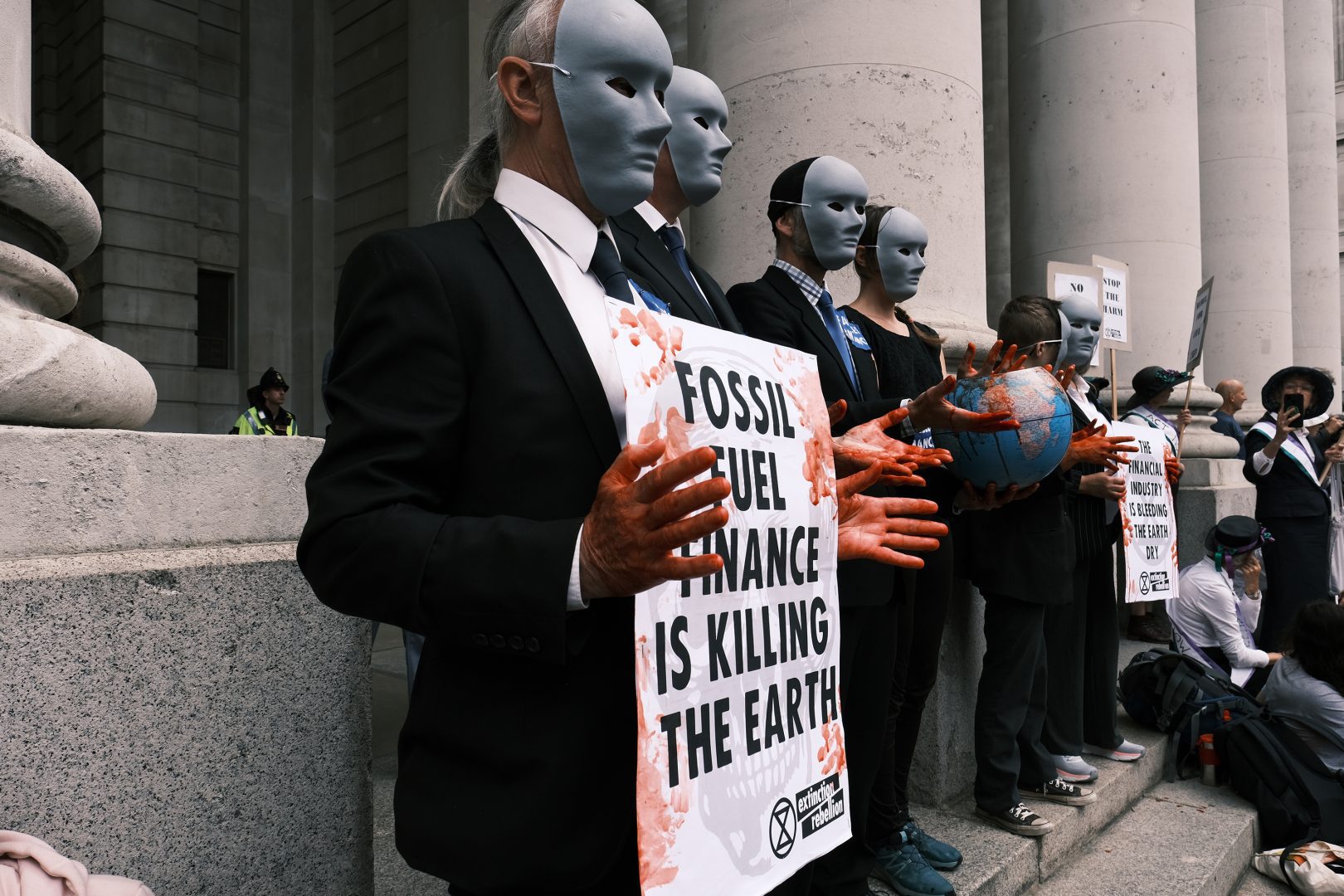
WFC is the world’s third largest funder of fossil fuels, providing $271 billion in lending and underwriting to fossil fuel companies during 2016-2021, including $37 billion to 100 top companies engaged in new fossil fuel exploration and development.[7] WFC’s existing commitments do not equate to alignment: under its 2030 absolute emissions target for oil and gas, WFC can continue to finance new fossil fuel exploration and development, increasing stranded asset risk.
Without a policy to phase out financing of new fossil fuel exploration and development, WFC is unlikely to meet its climate commitments and merits scrutiny for material risks that may include:
Greenwashing: Regulators are tightening and enforcing greenwashing regulations, which could result in fines and settlements.[8]
Regulation: Central banks, including the Fed, are starting to implement climate stress tests[9] and scenario analyses,[10] and some have begun to propose increased capital requirements for climate risks.[11]
Competition: Dozens of global banks have adopted policies to phase out financing for new oil and gas fields[12] and coal mines.[13]
Reputation: Campaigns targeting WFC’s climate policies include organizations with tens of millions of global members and supporters, including current and potential WFC customers.[14]
By exacerbating climate change, WFC is increasing systemic risk, which will have significant negative impacts – including physical risks and transition risks[15] – for itself and for diversified investors.
Best practices for banks to achieve net zero involve financing of companies reducing scopes 1-3 absolute emissions and allocating capital in line with science-based, independently verified short, medium and long-term decarbonization targets. Organizations like the Science Based Targets initiative and Transition Pathway Initiative can provide independent verification of decarbonization targets.
RESOLVED: Shareholders request that the Board of Directors adopt a policy for a time-bound phase-out of WFC’s lending and underwriting to projects and companies engaging in new fossil fuel exploration and development.
Supporting Statement: This proposal is intended, in the discretion of board and management, to enable support for WFC’s energy clients’ low-carbon transition.
[1] https://www.swissre.com/media/press-release/nr-20210422-economics-of-climate-change-risks.html
[2] https://www.iisd.org/system/files/2022-10/navigating-energy-transitions-mapping-road-to-1.5.pdf
[3] https://www.ipcc.ch/report/ar6/wg3/resources/spm-headline-statements/
[4] https://www.iea.org/commentaries/what-does-the-current-global-energy-crisis-mean-for-energy-investment
[5] https://sites.wf.com/co2emission /
[6] https://www.unepfi.org/net-zero-banking/commitment/
[7] http://bankingonclimatechaos.org/
[8] https://www.bankingsupervision.europa.eu/press/speeches/date/2022/html/ssm.sp220922~bb043aa0bd.en.html
[9] https://www.bankingsupervision.europa.eu/press/pr/date/2022/html/ssm.pr220708~565c38d18a.en.html
[10] https://www.federalreserve.gov/newsevents/pressreleases/other20220929a.htm
[11] https://www.bis.org/review/r220223e.htm
[12] https://oilgaspolicytracker.org/
[13] https://coalpolicytool.org/
[14] https://stopthemoneypipeline.com/
[15] https://www.bis.org/bcbs/publ/d517.pdf