




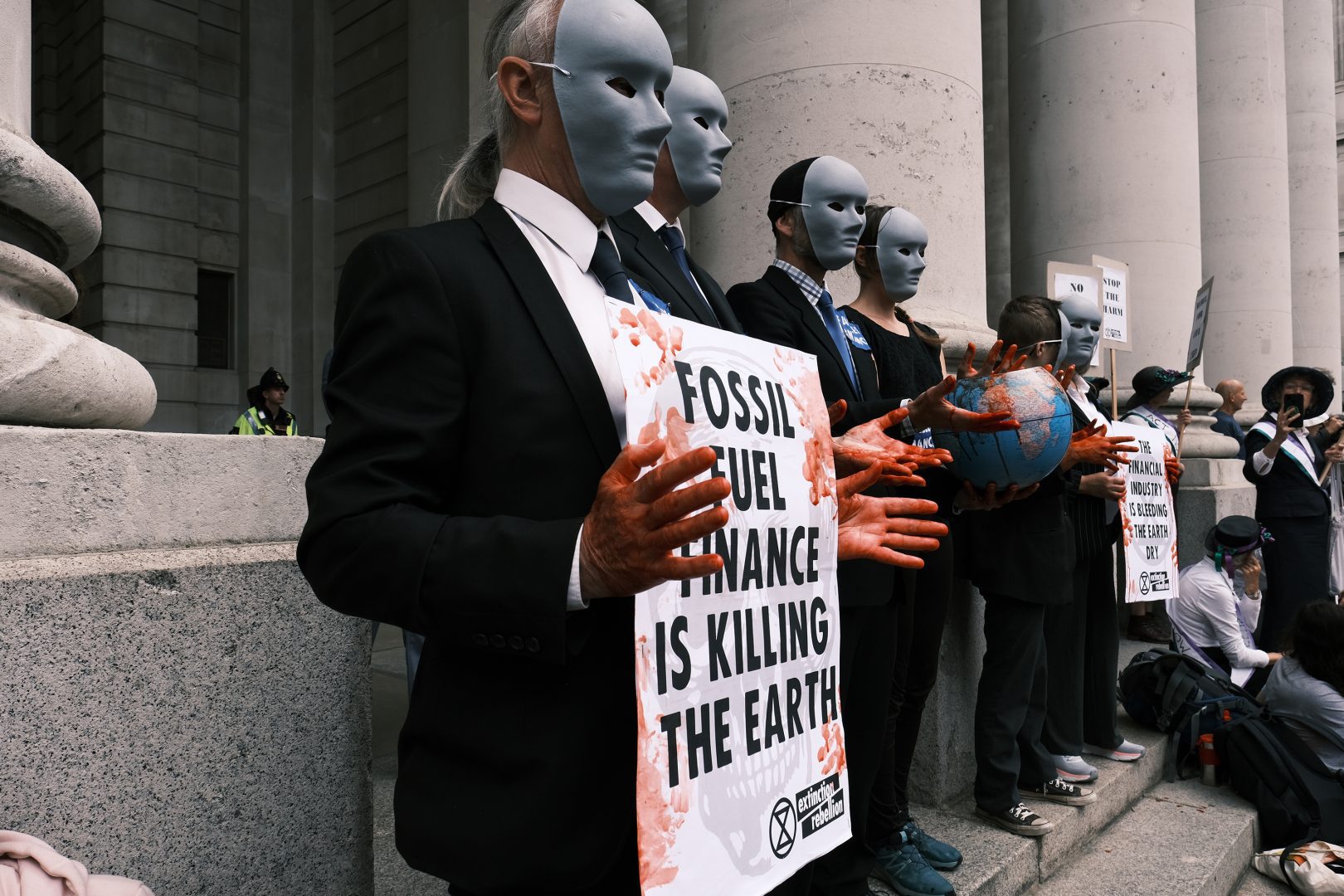
Nike Inc. investors are redoubling their efforts to pressure the sports retailer to focus on treatment of workers in its supply chain, as the company attempts to freshen its image and boost slumping sales with its Olympics “Winning Isn’t for Everyone” ad campaign.
The Interfaith Center on Corporate Responsibility (ICCR) and the Responsible Contracting Project (RCP) have released Investor Guidance on Responsible Contracting, outlining the critical role of commercial contracts in supporting robust human rights and environmental due diligence (HREDD) processes.
CONTACT:
Susana McDermott
Director of Communications
Interfaith Center on Corporate Responsibility (ICCR)
201-417-9060 (mobile)
smcdermott@iccr.org
NEW YORK, NY, TUESDAY, APRIL 23, 2024 – The Investor Guidance on Responsible Contracting released today by the Interfaith Center on Corporate Responsibility (ICCR) and the Responsible Contracting Project (RCP) explains the critical role played by commercial contracts in supporting more robust human rights and environmental due diligence (HREDD) processes.
More than ever, investors are actively seeking to understand and mitigate the risks related to a company’s human rights and environmental (HRE) performance to make sound investment and divestment decisions. This new guidance provides investors with multiple tools to engage their portfolio companies on the principles of responsible contracting to improve both HRE and financial performance and to achieve better alignment with evolving legal requirements.
This Investor Guidance recommends that investors engage with their portfolio companies to ensure that they are using their supply contracts to support effective HREDD processes. Shifting the entire responsibility for upholding HRE standards down the supply chain is not effective for managing human rights risks. In fact, risk-shifting can actually aggravate human rights risks.
For contracts to support the HREDD process, companies should move away from the traditional one-sided, strict compliance model of contracting towards a shared responsibility model that is due diligence-aligned, dynamic, responsive, cooperation-based, and supported by responsible purchasing practices.
“Faith- and values-based investors, including ICCR members, see a commitment to positive HRE performance as a key metric in their investment decisions,” said Chavi Keeney Nana, Director of Equitable Global Supply Chains at ICCR. “The shared responsibility approach at the heart of responsible contracting is the best way to ensure that companies are investing across their supply chains in policies and, more importantly, practices that safeguard the lives and livelihoods of workers and the health of the environment. We hope this Guidance will serve as a resource for investors to push companies to draft into contractual language the commitments they make in their sustainability reports.”
Said Sarah Dadush, Director of the Responsible Contracting Project, “Commercial contracts are frequently overlooked as tools for effecting change in global supply chains, and yet they are powerful legal instruments that companies can use to implement human rights and environmental policies and standards across their supply chains, even in the absence of national law. But not all contracts are created equal. Some foster commercial relationships that are extractive, deceptive, and unreliable, while others foster collaboration, trust, transparency, and resilience. This Guidance equips investors to steer their portfolio companies in the direction of the latter.”
Included in this Investor Guidance are conceptual and practical tools for carrying out engagements related to contracting such as questions for investors to ask their portfolio companies concerning their contracts, template corporate engagement letters and shareholder resolutions, and responses to anticipated pushback investors may receive from companies during corporate dialogues.
The guidance draws on RCP’s core principles of responsible contracting and the RCP Toolkit–which outlines a shared responsibility model between buyers and suppliers for upholding HREDD processes–as well as decades of engagements by ICCR and its members to push companies to develop equitable global supply chains that do not rely on forced labor and to remediate the harms caused by forced labor when it occurs. The responsible contracting principles discussed in the Guidance will help companies align their contracts with the United Nations Guiding Principles for Business and Human Rights (UNGPs), the Organisation for Economic Cooperation and Development’s (OECD) Guidelines for Multinational Enterprises on Responsible Business Conduct, and the Due Diligence Guidance for Responsible Business Conduct, and other sector-specific OECD guidance to serve as effective components of HREDD processes and a robust risk-management regime.
About the Interfaith Center on Corporate Responsibility (ICCR)
The Interfaith Center on Corporate Responsibility (ICCR) is a broad coalition of more than 300 institutional investors collectively representing over $4 trillion in invested capital. ICCR members, a cross-section of faith-based investors, asset managers, pension funds, foundations, and other long-term institutional investors, have over 50 years of experience engaging with companies on environmental, social, and governance (“ESG”) issues that are critical to long-term value creation. ICCR members engage hundreds of corporations annually to foster greater corporate accountability. Visit our website www.iccr.org and follow us on Twitter/X (@iccronline), LinkedIn, and Facebook.
About the Responsible Contracting Project
The Responsible Contracting Project (RCP) works to improve human rights in global supply chains by developing and disseminating practical tools to implement human rights and environmental due diligence (HREDD) in commercial contracts. Our international team of legal and business and human rights experts collaborates with companies, investors, and public and private standard setters to achieve uptake and implementation of the core RCP Principles, which operationalize the shared responsibility approach to HREDD enshrined in the UN Guiding Principles on Business and Human Rights, the OECD Guidelines for Multinational Enterprises, and the OECD Due Diligence Guidance for Responsible Business Conduct. Visit our website.
This guidance is a resource for investors to use when discussing responsible purchasing and contracting issues with companies.
On September 7, 2023, signatories ABN AMRO and CCLA Investment Management, supported by ICCR and its members, PGGM, and Triodos Investment Management, sent a joint investor letter to Nike to ask the company to pay outstanding wage payments for garment workers in factories in Cambodia and Thailand employed by the Ramatex Group. Workers were dismissed and/or did not receive legally owed partial wages during a factory shutdown.
This joint investor letter describes two cases of labor violations, where garment workers employed by Nike’s largest international supplier, the Ramatex Group and the Hong Seng Knitting Group (that has a joint venture with the Ramatex Group) were not paid legally owed wages and benefits in full in 2020, amounting to a collective $2.2 million owed to more than 4,500 garment workers in Cambodia and Thailand respectively. The joint investor letter has been sent to Nike which has been aware of these two rights issues for the past three years, and Nike will be sent an update of signatories on a regular basis. The investor letter emphasizes the need for remedy in the form of payment of unpaid wages and benefits. It was drafted by a coalition of investors after consultation with NGOs and unions. These investors currently represent over $4 trillion AUM/AUA.
Please find below the joint investor letter with the signatories. The letter will be updated on a regular basis to reflect the number of signatories.
For more information, contact:
Chavi Keeney Nana
Director, Equitable Global Supply Chains
cnana@iccr.org
The majority of apparel and footwear brands still cannot demonstrate how they are mitigating the risks of forced labor that may result from unethical recruitment practices.
NEW YORK, NY, WEDNESDAY, MAY 26TH, 2021 – In early 2019, a group of global investors, led by the Interfaith Center on Corporate Responsibility (ICCR) and supported by the Principles for Responsible Investment (PRI) committed to address the findings of KnowTheChain’s 2018 apparel and footwear benchmark which demonstrated a sector-wide failure to address exploitative recruitment practices that could lead to forced labor. Forty-three companies were sent letters, or otherwise engaged.
Today, KnowtheChain released its 2021 sector benchmark which indicates that these investor engagements have had some impact on worker rights: all of the companies benchmarked in both 2018 and 2021 made some improvements since 2018, with the strongest improvements seen on the theme of responsible recruitment. Specifically, since 2018, nine companies published a policy prohibiting worker-paid recruitment fees in their supply chains, and five companies reported that workers in their supply chains have been repaid recruitment fees.
Yet, the new benchmark also revealed several disturbing trends: of the 37 largest apparel and footwear companies in the world, the majority (78%) still do not disclose whether workers in their supply chains are repaid recruitment fees let alone how they protect workers from having to pay such fees in the first place.
Even before the COVID-19 pandemic, reports of forced labor in the sector were skyrocketing with allegations of abuse identified in the supply chains of more than half the benchmarked companies (54%) and some companies facing up to four allegations. In addition, many workers have lost their livelihoods due to COVID-19 and millions of global apparel workers still await payment by their employers of legally owed wages and benefits. Yet, only four out of the 37 companies (11%) benchmarked could demonstrate several examples of how workers were receiving remedy, including repayments of unpaid wages or recruitment fees. In fact, half of the companies scored zero on the remedy indicator including online retailers such as Amazon and Zalando, which have profited significantly during the pandemic. Not only are companies not remediating past abuses, the benchmark also showed that they are a far cry away from building a more equitable and resilient supply chain system as the economy recovers. Half the companies scored zero on the most worker-centric indicators: those that focus on due diligence processes related to worker participation, and concrete outcomes for workers.
“Companies with sound supply chain management pay workers their legally owed wages and severance pay,” said Vincent Kaufmann, CEO, Ethos Foundation. “We urge investors to use tools such as KnowTheChain to identify risks and steps companies in their portfolios need to take to remedy detected shortcomings.”
The group of more than 60 investors led by ICCR said they are committed to press companies to ensure these remedies are awarded to workers, and are prepared to act if companies fail to do so.
“KnowTheChain benchmarks have strengthened our engagements and enabled us to distinguish companies that are taking important and replicable steps from those whose inaction is putting vulnerable workers at risk. It is imperative that companies address exploitative working conditions in their supply chains, including forced labor and human trafficking—and we need to see proof on the ground. Policies are no longer sufficient; companies need to show that their policies and processes make a difference for workers,”said Julie Tanner, Managing Director, Christian Brothers Investment Services. “As a responsible investor, where portfolio companies continue to fail to remediate abuses, we will use the power of the proxy and vote against boards to stand in solidarity with workers in global supply chains.”
The investors also say they will urge companies to adopt worker-centric due diligence models that are built on responsible purchasing practices and support worker empowerment, including freedom of association and collective bargaining and enforceable labor rights agreements.
“ICCR members have focused on workplace human rights in supply chains for decades,” stated David Schilling, Senior Program Director, ICCR. “Some leading companies have made progress, but the sector, as evidenced by the KTC benchmark, has not sufficiently filled the gap between policy, processes and performance. To do so, companies and their suppliers must engage workers as agents to transform the garment sector from the ground up, where workers receive a living wage and labor under safe and healthy conditions.”
“The investor community must come together and mobilize and protect the rights of the millions of workers that are in situations of modern slavery and human trafficking today,” said Fiona Reynolds, CEO, PRI. “This is why the PRI has been supporting ICCR’s KnowTheChain engagements on forced labor in apparel supply chains since its inception. With our five-year human rights program, the PRI will ensure investors play their part to ensure respect of workers’ rights in global supply chains.”
About the Interfaith Center on Corporate Responsibility (ICCR)
Currently celebrating its 50th year, ICCR is the pioneer coalition of shareholder advocates who view the management of their investments as a catalyst for social change. Its 300-plus member organizations comprise faith communities, socially responsible asset managers, unions, pensions, NGOs and other socially responsible investors with combined assets of over $USD 4 trillion. ICCR members engage hundreds of corporations annually in an effort to foster greater corporate accountability. Visit our website www.iccr.org and follow us on Twitter, LinkedIn and Facebook.
By David Schilling, ICCR Senior Program Director
Tomorrow is the 7th anniversary of the Rana Plaza building collapse in Bangladesh where 1,138 garment workers were killed and over 2,500 injured. This tragic, yet avoidable event and one of the worst workplace disasters in modern history exposed the human rights risks of outsourcing apparel manufacturing to factories with inadequate safeguards to protect workers. A group of 250 investors, with $4.5 trillion in assets under management organized by the Interfaith Center on Corporate Responsibility, quickly mobilized to appeal to apparel brands and retailers to join the Accord on Fire and Building Safety1, a multi-stakeholder initiative which has helped to reform the sector and create safe factories through a binding agreement between global brands and trade unions.
Today, another unprecedented humanitarian crisis is unfolding in Bangladesh: The jobs of 4.1 million garment workers are being threatened as global brands cancel over $3 billion in orders due to the COVID-19 crisis. The coronavirus pandemic has led to worldwide store closures and now many apparel brands are refusing to accept completed garment orders, leading to factory closures. A former garment worker I talked with this week told me, “The impact of workers losing their jobs and their health threatened by COVID-19 is many times worse than Rana Plaza, as bad as that was.”
A recent survey of 319 garment factory owners in Bangladesh conducted by Penn State University’s Center for Global Workers’ Rightsin late March revealed that when cancelling orders, over 72% of buyers refused to pay for raw materials (e.g. fabric) already purchased by their suppliers, and over 91% of buyers refused to pay suppliers’ production costs for goods they ordered. The report states: “As a result of order cancellations and lack of payment, 58% of factories surveyed report having to shut down most or all of their operations.”
More than 2 million garment workers in Bangladesh have already been fired or furloughed as a result of COVID-19-related order cancellations and the failure of buyers to pay for these cancellations. The situation in Bangladesh is replicated in other countries like Cambodia, Vietnam and India, where apparel production is a major source of export revenue. Due to poverty wages, these workers typically have no savings they can fall back on. The Government of Bangladesh has announced an incentive package for paying salaries and allowances of export-oriented industry workers and employees. The test of its effectiveness will be measured by how many fired or furloughed workers receive funds.
At a minimum, investors are calling on companies to take the following actions on COVID-19 and to publicly disclose the steps they have taken:
- Promptly pay suppliers for existing orders without renegotiating previously agreed pricing;
- Don’t punish suppliers with payment reductions for delays due to COVID-19-related supply chain shortages (e.g., delayed raw material deliveries from China);
- Where suppliers continue production, take steps to ensure that:
- worker health and safety are prioritized (e.g. – provide hygienic working and living conditions, including measures for social distancing and protective gear, provide paid sick leave and strengthen communication on COVID-19 guidance in migrant workers’ languages);
- overtime is on a voluntary basis and compensated at a premium rate;
- Alternative sourcing or production does not occur in, from, or connected to, the Xinjiang Uyghur Autonomous Region (XUAR) due to China’s early recovery from COVID-19, as the XUAR continues to be tainted with human rights violations, including forced labor affecting the apparel sector.
We recognize that global apparel companies face painful, unprecedented challenges in their operations and we applaud the companies that have committed to pay their suppliers in full for existing orders and those in process, including adidas, H&M, Inditex, Marks & Spencer, Nike, PVH, Target (USA), UNIQLO and VF Corporation. More companies must step up to do the same. (Current information about company action is available on the Business & Human Rights Resource Centre page and the Worker Rights Consortium (WRC) brand tracker.)
We welcome today’s announcement of the “COVID-19: Action In The Global Garment Industry”, statement signed by the International Trade Union Confederation, the International Organisation of Employers, IndustriALL Global Union, Bangladesh Employers’ Federation and major brands and retailers. It is a first step to mobilize funding from financial institutions and governments for manufacturers and workers to help mitigate the impact of the crisis, resources that are urgently needed.
In the coming weeks, ICCR and KnowTheChain (KTC) will be coordinating investor letters and engagements with the 43 apparel/footwear companies ranked in the KTC’s 2018 Apparel and Footwear Benchmark Findings Report. We invite investors to join this initiative and add their voices to the call for responsible action to ameliorate the desperate situation of apparel workers across the globe. (Contact: dschilling@iccr.org, adorett@iccr.org)
1 On 14 January 2020, representatives of the Bangladesh Garment Manufacturers and Exporters Association (BGMEA) and the Steering Committee of the Accord on Fire and Building Safety in Bangladesh (Accord), signed an agreement to establish the RMG Sustainability Council (RSC) by June 1, 2020, which would include the Accord’s policies, protocols and staff but under a new governance structure made up of BGMEA representatives along with brands and trade unions. The date for its formation has been postponed because of impacts related to COVID-19.