




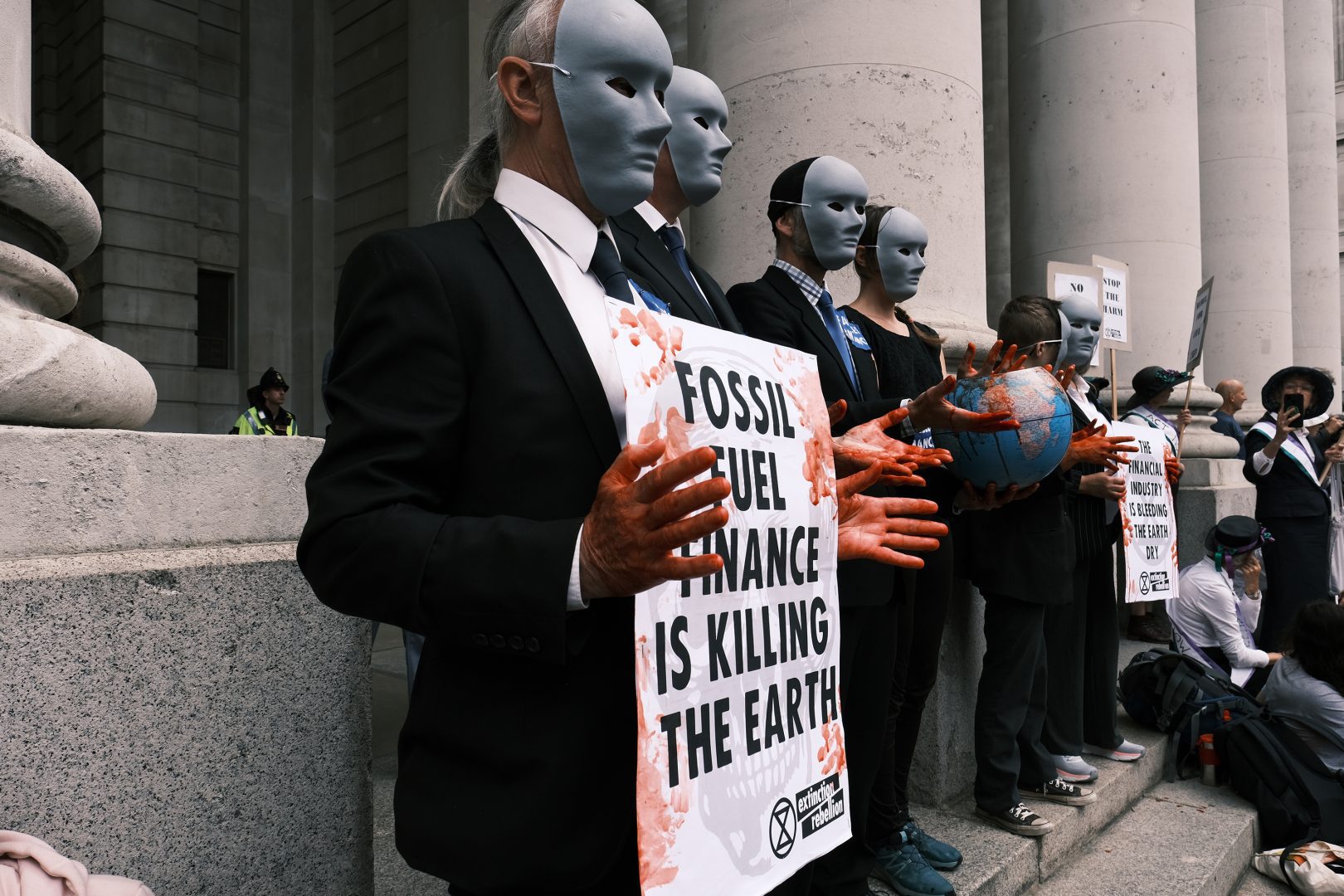
Report sheds light on key topics for ICCR members, with climate still in focus and AI rising up the agenda.
Save the Date: Thursday, February 15th at 11:30 am ET to Hear about ICCR Member Proposals for the 2024 Proxy Season

Join us on Thursday, 2/15 from 11:30 am to 12:30 pm ET, when we will share a preview of ICCR members’ 2024 shareholder proposals and our 2024 Proxy Resolutions and Voting Guide.
Our webinar will help contextualize the more than 300 resolutions filed by ICCR members for this proxy season in this politicized environment, with a deeper discussion by proponents of the rationale for key initiatives.
Learn about:
- A new proposal filed at a pharmaceutical company calling on the board of directors to respect the human right to health in accordance with the Universal Declaration of Human Rights and the UN Sustainable Development Goals;
- Living wage proposals calling on U.S. companies to take steps toward paying a living wage, citing rising income inequality data including CEO pay vastly outpacing median worker pay;
- Due to the risk of artificial intelligence eliminating jobs and reducing wages for workers, several resolutions have been filed seeking a report on the use of AI in business operations;
- Resolutions have been filed at companies with business operations in conflict-affected and high-risk areas (CAHRA) calling on the boards to commission third-party reports on their due diligence processes related to human rights risks in these areas.
As always, there will be a Q&A after the presentations where you will be invited to ask questions of the presenters.
All registrants will receive a link to download the Guide following the webinar.
Save the Date: Thursday, February 15th at 11:30 am ET to Hear about ICCR Member Proposals for the 2024 Proxy Season
Join us on Thursday, 2/15 from 11:30 am to 12:30 pm ET, when we will share a preview of ICCR members’ 2024 shareholder proposals and our 2024 Proxy Resolutions and Voting Guide.
Our webinar will help contextualize the more than 300 resolutions filed by ICCR members for this proxy season in this politicized environment, with a deeper discussion by proponents of the rationale for key initiatives.
Learn about:
- A new proposal filed at a pharmaceutical company calling on the board of directors to respect the human right to health in accordance with the Universal Declaration of Human Rights and the UN Sustainable Development Goals;
- Living wage proposals calling on U.S. companies to take steps toward paying a living wage, citing rising income inequality data including CEO pay vastly outpacing median worker pay;
- Due to the risk of artificial intelligence eliminating jobs and reducing wages for workers, several resolutions have been filed seeking a report on the use of AI in business operations;
- Resolutions have been filed at companies with business operations in conflict-affected and high-risk areas (CAHRA) calling on the boards to commission third-party reports on their due diligence processes related to human rights risks in these areas.
As always, there will be a Q&A after the presentations where you will be invited to ask questions of the presenters.
All registrants will receive a link to download the Guide following the webinar.
NEW YORK, NY, WEDNESDAY, MAY 30, 2023 – Amazon ($AMZN) shareholders are able to announce the final votes behind a group of 13 proposals that went to a vote at last week’s annual meeting of stockholders.
Consistent with a pattern established in prior years, Amazon management delayed the release of the final vote tallies until late Friday afternoon in advance of the Memorial Day weekend.
Many of the proposals received strong backing in the 30 – 40% range, despite founder Jeff Bezos’s roughly 12% control of the company reducing the chances for a majority vote on a shareholder-sponsored proposal.
At the annual meeting, seven former and current Amazon workers challenged the CEO and Board on their failure to address risks related to worker rights, the sale of surveillance technology, and the company’s contribution to climate risk. Workers organizing with United for Respect (UFR), Missouri Workers Center (MWC), and No Tech for Apartheid were joined by two workers in Bessemer, the recently unionized Palmdale Delivery Service Partner, and Chris Smalls from Amazon Labor Union.
Videos of the workers are here:
- Ron Sewell, member of UFR;
- Yvonda Clopton, member of MWC;
- Laith Abad, member of Drop Nimbus.
Said Nadira Narine, ICCR’s Sr. Program Director who directs ICCR’s Advancing Worker Justice program and helps coordinate shareholders’ engagements with Amazon, “We are particularly pleased to see continued strong support for proposals invoking foundational worker rights’ themes such as freedom of association and worker health and safety as the company is notorious for its failures in this area. When over one-third of shareholders call for changes to the way Amazon treats its workers, we believe management and the board have an obligation to respond.”
“Amazon’s human capital management strategy implements constant surveillance, demanding quotas, and a punitive ‘time-off-task’ tracking system – all contributing to high injury and turnover rates,” said Constance Ricketts, Head of Shareholder Activism at Tulipshare, which filed a proposal calling for a report on working conditions that received 35.4% overall support. “Amazon’s self-reporting of health and safety data has been challenged in a complaint to the SEC and a report by the Strategic Organizing Center, numerous OSHA citations, and an ongoing investigation by the Department of Justice regarding possible fraudulent conduct designed to hide injuries from OSHA and others. This proposal received strong investor backing showing that shareholders agree with Amazon employees, activists, and even former Amazon executives that the company’s current management system is unsustainable without worker-driven social responsibility.”
“This is a big win for workers, and for investors who recognize that good human capital management practices are crucial to companies’ success. As one of the largest employers in the world, Amazon has the power to influence labor rights globally”, said Sarah Couturier-Tanoh, Manager of Corporate Engagement and Shareholder Advocacy, SHARE, which filed the proposal calling for a human rights impacts assessment that received 34.9% support .“Amazon can no longer ignore its union problem as workers, investors, and regulators expect the board and the management to demonstrate a genuine intention to respect workers’ rights, including freedom of association and collective bargaining across its operations.”
Notably, a crop of first-time proposals all achieved the threshold of support required to be eligible for refiling next year, including one proposal requesting that Amazon align its lobbying activities with the goals of the Paris Climate Agreement to keep global warming below 1.5 °C that received a significant 23.9% result.
“As a world-leading corporation, Amazon has the opportunity to also lead in climate awareness, climate action, and climate transparency. The strong vote on this 1st-time proposal demonstrates that shareholders are eager for the company to move the needle globally – in ways that help itself, its peers, and the world at large to meet these unprecedented challenges,” said Bruce Herbert, Chief Executive of Newground Social Investment.
All the proposals and their vote results can be found on this webpage.
About the Interfaith Center on Corporate Responsibility (ICCR)
The Interfaith Center on Corporate Responsibility (ICCR) is a broad coalition of more than 300 institutional investors collectively representing over $4 trillion in invested capital. ICCR members, a cross-section of faith-based investors, asset managers, pension funds, foundations, and other long-term institutional investors, have over 50 years of experience engaging with companies on environmental, social, and governance (“ESG”) issues that are critical to long-term value creation. ICCR members engage hundreds of corporations annually in an effort to foster greater corporate accountability. Visit our website www.iccr.org and follow us on Twitter, LinkedIn, and Facebook.

NEW YORK, NY, THURSDAY, DECEMBER 15TH, 2023 – Today Amazon ($AMZN) shareholders announced a slate of 15 proposals they are hoping to put before their fellow shareholders at the company’s 2023 annual meeting in the spring. Investors say Amazon’s size, global reach, and political influence give it unparalleled power to shape societal and global economic systems. Investors also expressed frustration that their attempts to engage the company on these concerns have been rebuffed. Most of these proposals were filed by ICCR members.
While each proposal speaks to a different concern, collectively they paint a portrait of a company in need of strengthened policies and board oversight to better manage risks the shareholders say are material to the long-term health of the company and their investments. The full list of proposals, their proponents, and quotes are available at this webpage.
Reports of Worker Rights Abuses
As the country’s largest employer, several proposals spoke to Amazon’s treatment of its warehouse employees in response to multiple allegations of abuse that have surfaced in news reports. One such proposal called on the company to commission an independent, third-party assessment of Amazon’s adherence to its stated commitment to workers’ freedom of association and collective bargaining rights. According to the proposal, Amazon has been the subject of negative media coverage both in the U.S. and internationally accusing the company of interfering with workers’ exercise of their rights through anti-unionization tactics, including allegations of intimidation, retaliation, and surveillance.
“For a company with a massive global workforce like Amazon, respect for the right of its employees to freedom of association and collective bargaining should be a baseline expectation,” said Kevin Thomas, Chief Executive Officer, SHARE. “When a large part of the shareholder base supported our resolution on that issue last year, and the company did nothing to respond to that clear signal, we knew we had to put this back on the ballot and raise our voices that much louder.”
Another proposal filed by Tulipshare called for an audit and report of the working conditions and treatment in Amazon warehouses.
Constance Ricketts, Head of Shareholder Activism at Tulipshare which led the filing said, “Amazon’s human capital management strategy implements constant surveillance, demanding quotas, and a punitive ‘time-off-task’ tracking system – all contributing to high injury and turnover rates. This proposal received strong investor backing in 2022, showing that shareholders agree with Amazon employees, activists, and even former Amazon executives that the company’s current system is unsustainable. Tulipshare is confident that Amazon employees’ historic unionization efforts have paved the way for this proposal to earn a majority backing in 2023.”
According to Daniel Olayiwola, SAT4 Warehouse Associate and United for Respect member-leader, “Last year I became the first Amazon warehouse associate to file my own shareholder resolution at the company, calling for an end to unsafe productivity quotas and workplace surveillance. But after Andy Jassy and the board opposed my, and every other shareholder’s resolution, the problems remain. This year I’m encouraged that shareholders are once again demanding change and accountability at Amazon and continuing to echo worker concerns around racial pay gaps, unsafe warehouse working conditions, and workers’ rights.”
Infringements on Digital/Human Rights
With nearly five billion monthly visits, Amazon.com is the world’s largest e-commerce platform allowing it to facilitate, or impede, free expression and access to information for billions of people through products and services sold on the platform. However, Amazon has reportedly removed products and content from the e-commerce platform following pressure from authoritarian regimes, without disclosing the removal. A proposal was filed requesting transparency reporting to provide more detailed quantitative disclosures on these removals or restrictions of content and products on the Amazon.com platform.
Said the proponent Sister Judy Byron, Director of the Northwest Coalition for Responsible Investment, “Shareholders are rightly concerned that by failing to disclose censorship requests from governments, Amazon may be obscuring its participation in an array of human rights violations that reflect an irresponsible and dangerous status quo.”
Jan Rydzak, Company and Investor Engagement Manager at Ranking Digital Rights said, “Amazon operates e-commerce platforms in twenty countries and ships products to more than a hundred. Yet it publishes zero information about how it deals with government requests to restrict what users can buy, sell, and post around the world. It’s time for Amazon to open this black box and adopt the minimal transparency standards that other tech giants embraced years ago.”
Another proposal seeks to surface potential human rights abuses through the misuse of surveillance and other tech products and services by asking for an assessment of Amazon’s customer due diligence process. This proposal is being filed for the 4th time with ever-increasing shareholder support. At last year’s annual meeting the proposal garnered over 49% of the independent (excluding founder and executive shares) vote.
“As faith-based investors, we remain concerned about the potential human rights risks associated with the end use of Amazon’s technologies on vulnerable populations, including immigrant communities, people of color, and conflict-affected areas both domestically and abroad by the company’s customers,” said Dave Moore, Director of Investments at American Baptist Home Mission Society, who led the filing.
“Amazon’s technologies and services are powerful tools, which can do powerful harm in the hands of human rights abusers,” said Michael Connor, Executive Director of Open MIC. “Shareholders are rightly concerned that the company’s due diligence policies fail to prevent Amazon-enabled rights violations.”
Environmental Impacts
As the world’s largest retailer and e-commerce company, Amazon’s attention to its carbon footprint is critical in the global fight to curb climate change and reduce pollution. While the company has made certain environmental pledges, shareholders continue to press for stringent emissions reductions and call on the company to play a more positive role in pressing for climate-forward policies. One of several resolutions that call out the company’s exposure to environmental risks is a proposal filed by Newground Social Investment which seeks to learn more about how Amazon addresses misalignments between its lobbying and policy influence activities and its Net-Zero climate commitments.
“As a world-leading corporation, Amazon has the opportunity to also lead in climate awareness, climate action, and climate transparency. This proposal suggests simple ways for the company to move the needle globally – helping itself, its peers, and the world at large to meet these unprecedented challenges,” said Newground’s Chief Executive Bruce Herbert.
Governance Challenges
Shareholder proposals are also focusing on governance structures that hinder shareholders’ access to information needed to evaluate risks and to participate more fully in company board elections.
One such proposal requests country-by-country tax reporting in alignment with the Global Reporting Initiatives Tax Standard. “Aggressive tax avoidance strategies have a real cost to society,” said Seamus Finn of the Missionary Oblates of Mary Immaculate. “These schemes take away hundreds of billions of dollars in lost revenues yearly from government budgets, causing economic inequality to spread, harming the economy, and creating near- and long-term risks for investors. Amazon does not have to fight tax transparency; it should embrace it as other leading companies abroad and now in the U.S. are doing.”
The investors expect the proposals to go to a vote at Amazon’s annual meeting in the spring. Meanwhile, they will continue their attempts to dialogue with company representatives on these issues.
CONTACT:
Susana McDermott
Director of Communications
Interfaith Center on Corporate Responsibility (ICCR)
201-417-9060 (mobile)
smcdermott@iccr.org
About the Interfaith Center on Corporate Responsibility (ICCR)
Celebrating its 51st year, ICCR is the pioneer coalition of shareholder advocates who view the management of their investments as a catalyst for social change. Its 300-member organizations comprise faith communities, socially responsible asset managers, unions, pensions, NGOs, and other socially responsible investors with combined assets of over $4 trillion. ICCR members engage hundreds of corporations annually in an effort to foster greater corporate accountability. Visit our website www.iccr.org and follow us on Twitter, LinkedIn, and Facebook.
Meta is World’s Largest Source of Online Child Sexual Abuse Materials; Sex Trafficking Survivor to Speak at Tomorrow’s Annual Shareholder Meeting.
NEW YORK, NY, TUESDAY, MAY 24TH, 2022 —At the Meta shareholders meeting tomorrow in Menlo Park, CA, shareholders will vote on a proposal asking the company to report on how its plans for end-to-end encryption will affect its efforts to combat online child sexual exploitation.
The proposal was filed by Proxy Impact on behalf of individual shareowner Lisette Cooper and members of the Interfaith Center for Corporate Responsibility who are institutional shareowners. The proposal will be put forward at tomorrow’s annual meeting by the proponent’s daughter, Sarah Cooper, herself a child sex-trafficking survivor. Ms. Cooper was groomed as a teenager through Facebook Messenger, met a predator in Boston, and was sold into sex slavery.
This is the third year that the proposal will be put to a shareholder vote. It has the backing of the two largest proxy voting advisories—Institutional Shareholder Services and Glass Lewis. In 2021, the proposal received the support of nearly 980 million shares, representing about 56% of the independent/non-management-controlled vote.
In 2021, there were nearly 29 million reported cases of online child sexual abuse materials (CSAM). Nearly 27 million of these cases—or 92%—stemmed from Meta platforms such as Facebook, WhatsApp, Messenger, and Instagram. Governments, law enforcement agencies, and child protection organizations have harshly criticized Meta’s planned end-to-end encryption claiming it will cloak the actions of child predators and make children more vulnerable to online sexual abuse.
The National Center for Missing and Exploited Children estimates that Meta’s plan to apply end-to-end encryption to its platforms without first putting safety measures in place to stop CSAM could effectively conceal 70% of the CSAM incidents currently detected and reported on its platform.
The link between child sexual abuse and the internet is even more evident given the significant increase in global social media use during the COVID-19 pandemic, which has resulted in a huge surge in CSAM. The number of Meta’s CSAM reports increased 69% from its nearly 16 million reports in 2019, when shareholders first raised this issue with the company.
“As the world’s largest social media platform, there is no company more central to the exponential growth of online child sexual exploitation than Meta,” said Michael Passoff, CEO of Proxy Impact. “Its actions will, for better or worse, have a major impact on global child safety. Attempts to regulate social media always focus on the need to protect children. Recent legislation in the U.S., U.K., and European Union now present significant legal liability for companies that fail to address online child sexual abuse.”
Sarah Cooper, founding member of the Brave Movement and amember of the survivor council of ECPAT-USA is a survivor of child sexual abuse through Facebook Messenger, and now educates others about just how dangerous Facebook can be to children. “I was groomed on Facebook by an older man who pretended to be a teenager. Kids don’t understand the full implication of sharing sexual materials online. The main responsibility for the safety of children from predators using online platforms should not lie with the child or with the parent, but with the social media provider itself. Only they have the tools, the access, and the scope to provide a safe space for children. Now, Meta is making young people more vulnerable by planning to expand encryption across its platforms and pushing kids towards already encrypted WhatsApp through advertising campaigns, before fully dealing with the lack of safety on their platforms. We ask members of the Facebook Board of Directors to talk directly with survivors to better understand this urgent issue and form the basis of an ongoing collaboration. It’s time we turned the tide on child sexual exploitation and abuse online.”
Brave Movement’s #BeBraveZuck Campaign
The #BeBraveZuck Campaign was launched in April 2022 by the Brave Movement, to build on Sarah Cooper’s work with Meta shareholders and child safety organizations to hold Meta CEO Mark Zuckerberg accountable for the company’s role in facilitating online child sexual abuse.
In 2020, 79% of U.S. underage sex trafficking victims recruited online were recruited through Facebook or Instagram. A letter sent to Facebook by 120+ child protection organizations stated that Facebook’s encryption plan “presents an unacceptable risk to children, and would arguably make your services unsafe.”
Meta’s response has been to defend its push towards end-to-end encryption as a choice between internet privacy or child safety. Yet, tech experts point out that the technology exists to protect privacy while still allowing a search for CSAM in encrypted data.
“A company cannot claim to value internet privacy and human rights without protecting child privacy and children’s rights as well,” said Lisette Cooper, Vice-Chair, Fiduciary Trust International, a Meta shareholder and the mother of Sarah Cooper. “Shareholders are not being asked to choose between internet privacy and child safety—both of these issues can be adequately addressed. Meta needs to redouble its efforts on child safety by working with survivors of online sexual exploitation and child safety organizations to make their platforms safer for children. Strong child safety protections need to be in place before expanding end-to-end encryption to additional Meta platforms.”
Meta shareholders are encouraged to learn more about this issue. In addition, parents and teens can read or listen to Sarah Cooper’s story, and educate themselves about measures they can take to create a safe Internet environment for their children via BeInternetAwesome and The Family Online Safety Institute.
About the Interfaith Center on Corporate Responsibility (ICCR)
Celebrating its 51st year, ICCR is the pioneer coalition of shareholder advocates who view the management of their investments as a catalyst for social change. Its 300-member organizations comprise faith communities, socially responsible asset managers, unions, pensions, NGOs, and other socially responsible investors with combined assets of over $4 trillion. ICCR members engage hundreds of corporations annually in an effort to foster greater corporate accountability. Visit our website www.iccr.org and follow us on Twitter, LinkedIn, and Facebook.
About Proxy Impact
Proxy Impact provides shareholder engagement and proxy voting services that promote sustainable and responsible business practices. For more information, visit www.proxyimpact.com.
1. Proposal: Address Wealth Inequality through an Ownership Culture. Lead Proponent: Corporate Governance
“Amazon.com should address inequality and democracy by helping establish an ownership culture within the firm and in the larger society,” said James McRitchie of CorpGov.net. “This proposal asks Amazon.com to include a simple matrix, ideally using EEO-1 classifications, to report the stock ownership and associated voting power awarded to each tier of employees.”
2. Proposal: Amazon 401(k) Climate Alignment. Lead Proponent: As You Sow
“Amazon does a great job on climate in their operations with 100,000 new electric vehicles and data centers powered by renewables. Why is it that Amazon employees who are invested in their company retirement plan are profiting from companies burning down the Amazon?” said Andrew Behar, As You Sow CEO. “We are asking that the company deliver a report to investors about the material impact of investing out of alignment with their own sustainability goals and how this creates cognitive dissonance for employees and investors.”
3. Proposal: Customer Due Diligence. Lead Proponent: Sisters of St. Joseph of Brentwood (an Affiliate of Investor Advocates for Social Justice)
“Providing government agencies with technologies that may enable mass surveillance puts Amazon at risk of contributing to severe violations of international human rights and humanitarian law,” said Sr. Pat Mahoney of the Sisters of St. Joseph of Brentwood, the lead filer of the Customer Due Diligence proposal. “To prevent further harm to impacted stakeholders and mitigate risks to the company, Amazon must strengthen its processes for vetting government customers and contracting opportunities.”
4. Proposal: Employee Turnover. Lead Proponent: AFL-CIO
“Workforce turnover rates are an important indicator of whether a company offers good jobs,” said Brandon Rees, Deputy Director, Corporations and Capital Markets of the AFL-CIO. “The AFL-CIO’s shareholder proposal will give investors material information on workforce turnover that they need to assess Amazon’s progress towards its goal of becoming the ‘Earth’s Best Employer’.”
5. Proposal: Facial Recognition. Lead Proponent: Harrington Investments
“Amazon and its surveillance technology incorporating facial recognition has evolved into a perfect public/private partnership,” said John Harrington of Harrington Investments. “Authoritarian government can now utilize the technology to control populations while private sector corporations can manage the data to exploit facial identification for commercial advantage. The harm will be to civil liberties and competitive business practices.”
6. Proposal: Freedom of Association: Lead Proponent: SHARE
“The recent tragedies that led to the deaths of Amazon warehouse workers indicate the need for higher human rights commitments and better workforce practices at the e-commerce giant. Amazon should take greater responsibility for its workforce and allow them to use their freedom of association and rights to collective bargaining in the most effective way,” said Sarah Couturier-Tanoh, Manager of Corporate Engagement & Advocacy at SHARE.
7. Proposal: Hourly Employees on the Board of Directors. Lead Proponent: Oxfam America
“Amazon continues to rake in billions of dollars in profits, while workers suffer some of the highest warehouse injury rates in the nation,” said Robbie Silverman, Senior Corporate Advocacy Manager for Oxfam America. “Placing an hourly associate on Amazon’s board of directors would be transformational, signaling an authentic interest in hearing the voice of workers at the highest level of corporate governance and demonstrating a commitment to investors that the company is taking workers’ concerns seriously.”
8. Proposal. Independent Chair. Lead Proponent: Zevin Asset Management
“We need a change,” said Marcela Pinilla. Director, Sustainable Investing at Zevin Asset Management. “The company needs a refresh from the top. Leadership to date has not shown that it is capable of being accountable. The “Earth’s Best Employer” is treating employees as expendable in return for growth and expansion. Amazon is facing numerous challenges that have only grown more serious in the past year. This calls for an independent board chair to help confront the company’s many challenges and provide oversight of executives’ risk-taking behavior. We are filing this proposal for the second year because we see a stagnant mind-set in how Amazon executives consider and define business risks. This behavior has come at the expense of key relationships including its workers and communities. An independent board chair should be separate from the CEO. They should have no material relationship or affiliation with the company, and they should not be a former executive officer of the company. One key obligation of the Board is to understand the limits of untenable business practices.”
9. Proposal: Lobbying Expenditures Disclosure. Lead Proponent: The International Brotherhood of Teamsters
“Wanting to be the world’s best employer while funding organizations that lobby against workers’ rights is but one example of the misalignment between Amazon’s politics and public relations,” said Ken Hall, General Secretary-Treasurer of the Teamsters Union. “Without full disclosure of the company’s lobbying expenditures, shareholders don’t know if Amazon puts its money where its mouth is.”
10. Proposal. Paid Sick Leave. Lead Proponent: United Church Funds
Matthew Illian, UCF’s Director of Responsible Investing said: “One of the world’s largest and most profitable companies can afford to offer paid sick leave to all of its employees, and this would create a more loyal and adaptable workforce.”
11. Proposal: Paris-Aligned Lobbying. Lead Proponents: Newground Social Investment, Sisters of the Presentation of the Blessed Virgin Mary of Aberdeen, SD
“For years Newground has engaged Amazon on sorely-needed transparency, and oversight of its lobbying efforts,” said Bruce Herbert, AIF, Chief Executive, Newground Social Investment. “Though the company has certainly stepped up in particular ways regarding climate change and reducing emissions, the largest impact it may have is supporting trade associations and other initiatives whose work blocks climate progress. Amazon could be a real force and its lobbying dollars are vast – it has significantly outspent all of its tech peers in 2021. But it buys naming rights for the Climate Pledge Arena (in Seattle) while being part of the very trade associations that work to kill any major policy advances on climate. This gross misalignment cannot continue, and we ask investors to put an end to it by voting FOR this shareholder proposal.”
“We are a community of religious women and partners in mission who commit ourselves to steward our resources responsibly in an effort to care for all of creation,” said Sr. Pegge Boehm. “We literally take stock in Amazon to do the right thing for its people and the planet, as we have committed ourselves. We believe in Amazon’s potential to align their values with those who lobby and advocate on their behalf. We believe Amazon has a responsibility to steward their abundant resources for good. “To whom much is given, much is required,” Luke 12:48. So, in this time of climate crisis, we expect that you hold yourselves up to a high standard. At a minimum, we expect you to align your lobbying activities with the Paris Agreement’s ultimate goal of limiting average global warming to 1.5 degrees Celsius.”
12. Proposal: Plastic Pollution. Lead Proponent: Sara Sackner and supported by As You Sow
“Amazon is believed to be one of the largest corporate users of flexible plastic packaging, used for its blue and white e-commerce mailers, which cannot be effectively recycled,” said Conrad MacKerron, Senior Vice President, As You Sow, who is representing proponent Sara Sackner. “The company generates an estimated 465 million pounds of plastic packaging waste annually, much of which ends up in landfills or leaking into the environment. Unlike peers like Walmart and Target, the company has not set plastic use reduction goals. The proposal challenges the company to set such goals to help stem the global tide of plastic pollution, which poses threats to wildlife and human health.”
13. Proposal: Racial and Gender Pay Gaps. Lead Proponent: Arjuna Capital
“Amazon’s board has fought investors on racial and gender pay equity for the last 3 years, despite strong, consistent support for Arjuna Capital’s proposal,” said Natasha Lamb, Managing Partner at Arjuna Capital, which filed a proposal citing Amazon’s lack of best practice pay equity reporting. “Given the pay divides that have been exacerbated by the pandemic, protests to uphold Black lives, and Amazon’s own statements of solidarity, it’s inexcusable and hypocritical that the company continues to fight this simple and reasonable investor request. Now is the time for Amazon to address the structural racism and sexism that relegates minorities and women into low-paying jobs, so we can create a more diverse, innovative, and accountable organization.”
14. Proposal: Racial Equity Audit. Lead Proponent: New York State Common Retirement Fund
“Amazon continues to face controversies that raise questions whether the impact of its policies, practices and products uphold the company’s rhetoric opposing systemic racism and injustice,” said New York State Comptroller Thomas P. DiNapoli. “Following last year’s unprecedented vote by shareholders, it’s beyond time for Amazon to independently review whether it has the policies and plans in place to address the risks that come with a failure to safeguard against discrimination, racism, and inequalities.”
15. Proposal: Risks Associated with Use of Concealment Clauses. Lead Proponent: Whistle Stop Capital, as part of the Transparency in Employment Agreements Coalition led by Earthseed, Whistle Stop Capital, Open MIC and Frontier Technology
Said Meredith Benton, Principal/Founder of Whistle Stop Capital, “If a company uses employment clauses to conceal from the public its true workplace conditions investors cannot have confidence in either the diversity and inclusion promises made or the reporting shared.”
“This shareholder resolution is based on a simple premise: Companies benefit from knowing when sexual harassment, discrimination and unlawful behavior are happening in the workplace, which is why employees should be encouraged to speak out about such conduct. It’s simply good business,” said Michael Connor, Executive Director, Open MIC. “Amazon would be well-advised to weigh the resolution carefully and look to a future where employees are encouraged to help build a more equitable and productive work environment.”
16. Proposal: Tax Transparency. Lead Proponent: Missionary Oblates of Mary Immaculate / OIP Investment Trust -U.S Province
“Responsible taxation is a vital sustainability issue for investors,” said Rev. Séamus P. Finn OMI, OIP Trust. “Aggressive corporate tax avoidance cost hundreds of billions in lost revenues each year from government budgets. It exacerbates existing inequalities, undermines broad-based economic growth, and creates unnecessary asset level and systemic risks for investors. Public country-by-country reporting will allow investors to better understand Amazon’s business model and tax planning strategy and ensure that it’s growth fairly contributes to the communities in which it earns its profits and doesn’t unfairly undercut those companies taking a responsible approach to tax planning.”
17. Proposal: Worker Health & Safety Audit. Lead Proponent: Domini Impact Investments
“The COVID-19 Pandemic and the recent tragedy in Edwardsville, Illinois, have raised serious questions around workplace health and safety at Amazon’s facilities,” said Mary Beth Gallagher, Director of Engagement, Domini Impact Investments LLC. “The company’s high injury rates and turnover have also drawn scrutiny from legislators, regulators, and the public, while contributing to recent labor shortages and calls for change from workers. In light of this, Domini Impact Investments LLC is signaling to Amazon that investors want the company to listen to essential workers and support their right to a safe and healthy workplace.”
“At Amazon, machines get better treatment than people. Amazon associates are breaking their backs and working nonstop for the sake of same day delivery — our every move is watched and timed and if we slow down or mess up in any way, we are punished. Amazon’s inhumane, exploitative business model is a threat to working people and our economy as America’s workers are left injured, exhausted, and mentally battered each day. We must put an end to the high-tech sweatshops Amazon is running and the exploitative business model they are perpetuating across the country.” – Courtenay Brown (Amazon Associate at Avenel, NJ Fulfillment Center and Leader with United For Respect in Newark, New Jersey)
Proposal #5: Amazon 401(k) Climate Alignment. Vote: 9.1%. Lead Proponent: As You Sow
“Amazon does a great job on climate in their operations with 100,000 new electric vehicles and data centers powered by renewables. Why is it that Amazon employees who are invested in their company retirement plan are profiting from companies burning down the Amazon?” said Andrew Behar, As You Sow CEO. “We are asking that the company deliver a report to investors about the material impact of investing out of alignment with their own sustainability goals and how this creates cognitive dissonance for employees and investors.”
Proposal #6: Customer Due Diligence. Vote: 40.3%. Lead Proponent: Sisters of St. Joseph of Brentwood (an Affiliate of Investor Advocates for Social Justice)
“Providing government agencies with technologies that may enable mass surveillance puts Amazon at risk of contributing to severe violations of international human rights and humanitarian law,” said Sr. Pat Mahoney of the Sisters of St. Joseph of Brentwood, the lead filer of the Customer Due Diligence proposal. “To prevent further harm to impacted stakeholders and mitigate risks to the company, Amazon must strengthen its processes for vetting government customers and contracting opportunities.”
Proposal #7: Hourly Employees on the Board of Directors. Vote: 22.2%. Lead Proponent: Oxfam America
“Amazon continues to rake in billions of dollars in profits, while workers suffer some of the highest warehouse injury rates in the nation,” said Robbie Silverman, Senior Corporate Advocacy Manager for Oxfam America. “Placing an hourly associate on Amazon’s board of directors would be transformational, signaling an authentic interest in hearing the voice of workers at the highest level of corporate governance and demonstrating a commitment to investors that the company is taking workers’ concerns seriously.”
Proposal #8: Plastic Pollution. Vote: 48.9%. Lead Proponent: Sara Sackner and supported by As You Sow
“Amazon is believed to be one of the largest corporate users of flexible plastic packaging, used for its blue and white e-commerce mailers, which cannot be effectively recycled,” said Conrad MacKerron, Senior Vice President, As You Sow, who is representing proponent Sara Sackner. “The company generates an estimated 465 million pounds of plastic packaging waste annually, much of which ends up in landfills or leaking into the environment. Unlike peers like Walmart and Target, the company has not set plastic use reduction goals. The proposal challenges the company to set such goals to help stem the global tide of plastic pollution, which poses threats to wildlife and human health.”
Proposal #9: Report on Worker Health And Safety Differences. Vote: 13.2%. Lead Proponent: NYC
Proposal #10: Risks Associated with Use of Concealment Clauses. Vote: 24.9%. Lead Proponent: Whistle Stop Capital, as part of the Transparency in Employment Agreements Coalition led by Earthseed, Whistle Stop Capital, Open MIC and Frontier Technology
Said Meredith Benton, Principal/Founder of Whistle Stop Capital, “If a company uses employment clauses to conceal from the public its true workplace conditions investors cannot have confidence in either the diversity and inclusion promises made or the reporting shared.”
“This shareholder resolution is based on a simple premise: Companies benefit from knowing when sexual harassment, discrimination and unlawful behavior are happening in the workplace, which is why employees should be encouraged to speak out about such conduct. It’s simply good business,” said Michael Connor, Executive Director, Open MIC. “Amazon would be well-advised to weigh the resolution carefully and look to a future where employees are encouraged to help build a more equitable and productive work environment.”
Proposal #12: Tax Transparency. Vote: 17.5%. Lead Proponent: Missionary Oblates of Mary Immaculate / OIP Investment Trust -U.S Province
“Responsible taxation is a vital sustainability issue for investors,” said Rev. Séamus P. Finn OMI, OIP Trust. “Aggressive corporate tax avoidance cost hundreds of billions in lost revenues each year from government budgets. It exacerbates existing inequalities, undermines broad-based economic growth, and creates unnecessary asset level and systemic risks for investors. Public country-by-country reporting will allow investors to better understand Amazon’s business model and tax planning strategy and ensure that it’s growth fairly contributes to the communities in which it earns its profits and doesn’t unfairly undercut those companies taking a responsible approach to tax planning.”
Proposal #13: Freedom of Association: Vote: 38.9%. Lead Proponent: SHARE
“The recent tragedies that led to the deaths of Amazon warehouse workers indicate the need for higher human rights commitments and better workforce practices at the e-commerce giant. Amazon should take greater responsibility for its workforce and allow them to use their freedom of association and rights to collective bargaining in the most effective way,” said Sarah Couturier-Tanoh, Manager of Corporate Engagement & Advocacy at SHARE.
Proposal #14: Lobbying Expenditures Disclosure. Vote: 47.3%. Lead Proponent: The International Brotherhood of Teamsters
“Wanting to be the world’s best employer while funding organizations that lobby against workers’ rights is but one example of the misalignment between Amazon’s politics and public relations,” said Ken Hall, General Secretary-Treasurer of the Teamsters Union. “Without full disclosure of the company’s lobbying expenditures, shareholders don’t know if Amazon puts its money where its mouth is.”
Proposal #16: Report on Warehouse Working Conditions. Vote: 44.0%. Lead Proponent: Tulipshare
“Tulipshare’s proxy fight victory with Amazon is precedent setting for human capital management. Amazon’s human capital management strategy implements constant surveillance, demanding quotas which contribute to high injury and turnover rates, and a punitive “time-off-task” tracking system,” said Constance Ricketts, Attorney and Head of Shareholder Activism for Tulipshare. “The SEC agreed with Tulipshare that the extreme working conditions Amazon employees experience equate to a significant social policy that transcends ordinary business. This is a huge win for Amazon employees, activists, and warehouse workers at large.”
Proposal #17: Racial and Gender Pay Gaps. Vote: 28.8%. Lead Proponent: Arjuna Capital
“Amazon’s board has fought investors on racial and gender pay equity for the last 3 years, despite strong, consistent support for Arjuna Capital’s proposal,” said Natasha Lamb, Managing Partner at Arjuna Capital, which filed a proposal citing Amazon’s lack of best practice pay equity reporting. “Given the pay divides that have been exacerbated by the pandemic, protests to uphold Black lives, and Amazon’s own statements of solidarity, it’s inexcusable and hypocritical that the company continues to fight this simple and reasonable investor request. Now is the time for Amazon to address the structural racism and sexism that relegates minorities and women into low-paying jobs, so we can create a more diverse, innovative, and accountable organization.”
Proposal #19: Facial Recognition. Vote: 40.7%. Lead Proponent: Harrington Investments
“Amazon and its surveillance technology incorporating facial recognition has evolved into a perfect public/private partnership,” said John Harrington of Harrington Investments. “Authoritarian government can now utilize the technology to control populations while private sector corporations can manage the data to exploit facial identification for commercial advantage. The harm will be to civil liberties and competitive business practices.”
Floor Resolution: Productivity Quotas and Worker Surveillance. Vote: .2%. Lead Proponent: Daniel Olayiwola, Amazon worker